
Few sounds strike more fear into a computer user than a hard drive clicking — a rhythmic click… click… click where there should be a smooth hum. It has a nickname for a reason: the "click of death." But the click isn't random, and understanding what it actually means changes what you should do next. This guide explains the most common cause of hard drive clicking in 2026, why software can't fix it, and the specific steps that give your data the best chance of coming back.
From the engineers at CBL Data Recovery Singapore, who recover clicking drives in the clean room every week.
What the click actually is
Inside a traditional hard drive, data lives on spinning platters, and tiny read/write heads float a fraction of a millimetre above them on the end of an actuator arm. To read your data, the heads move across the platters guided by servo information.
The click is the sound of the heads failing to do their job and being forced back to try again. When a head can't read the servo data it needs to position itself, the drive parks the arm and re-attempts — over and over. That repeated reset is the clicking you hear. It's a mechanical cry for help.

The most common cause: head failure
By far the most frequent reason for clicking is read/write head failure, usually triggered by one of these:
- A drop or knock. The heads sit microscopically close to the platters. A bump — even a small one, especially while the drive is running — can cause a "head crash" where the head contacts the platter surface. Laptops and external drives are the usual victims.
- Worn or degraded heads. After years of use, heads simply wear out and lose the ability to read reliably.
- A damaged service area. Drives store firmware and calibration data in a reserved zone on the platters. If the heads can't read that area, the drive can't initialise and clicks.
- Contamination. A single particle inside the sealed drive can damage a head or scratch the platter, causing clicking.
Less commonly, clicking comes from a failing motor, a seized spindle, or a power problem — but head failure is the headline cause.
Why software will never fix a clicking drive
This is the most important thing to understand: a clicking drive is a mechanical failure, not a software one. No recovery program, no CHKDSK, no firmware "repair" tool can fix physically failing heads. Worse, every one of those attempts keeps the drive powered and the damaged heads dragging across the platters — which can scratch the surface and turn a recoverable case into an unrecoverable one.
The same goes for the internet's favourite myths: the freezer trick and gently tapping the drive. Both can cause permanent, catastrophic damage. Don't.
What to do the moment your drive clicks
Your actions in the first few minutes decide how much survives:
- Power it off immediately. Do not keep trying to access it. Every second of clicking risks scratching the platters.
- Don't restart it repeatedly. Powering on and off to "see if it works this time" is one of the most damaging things you can do.
- Don't run recovery software or disk utilities against it.
- Don't open the drive. The heads and platters must be handled in a clean room; opening it in normal air contaminates it instantly.
- Don't try the freezer or a tap. These destroy drives.
- Note what happened — a drop, a power event, water — and get a professional diagnosis.
With a clicking drive, the damage is cumulative. Each attempt to boot it drags failing heads across the platters and can scratch away the very data you want back. The safest thing you can do is turn it off and leave it off until an engineer can open it in a clean room. See our hard drive recovery service.
Can data be recovered from a clicking drive?
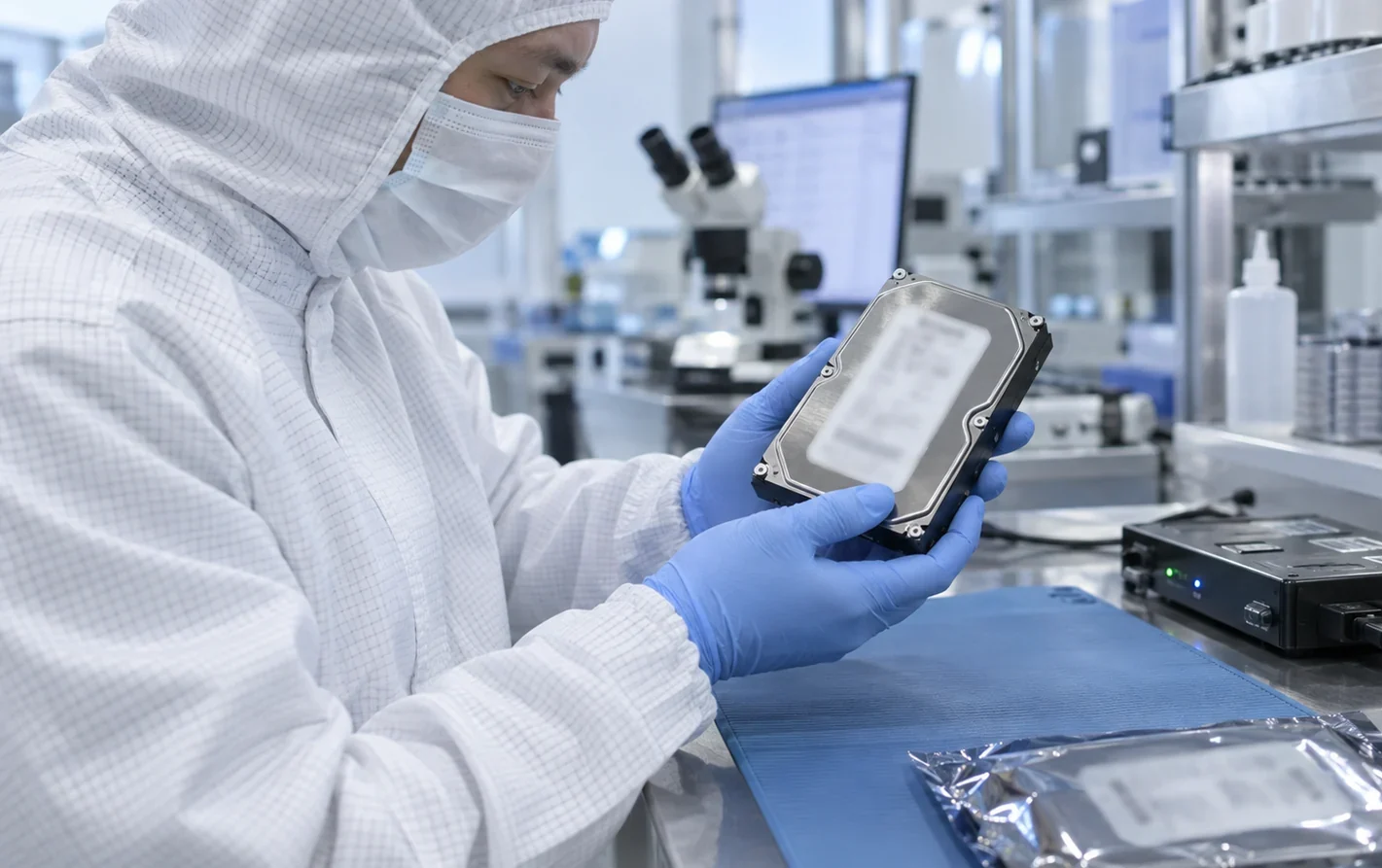
Very often, yes — but almost always only in a lab. Recovery from a clicking drive typically involves opening it in a clean room, replacing the failed heads with matched donor parts, and then carefully imaging the platters before the replacement heads wear out too. It's precise, hardware-intensive work with no software shortcut.
The outcome depends heavily on what caused the click and how many times the drive was powered on afterward. A drive brought in promptly, before the platters are scratched, has far better odds than one that was restarted dozens of times.
Prevention: reducing the risk
You can't make a hard drive immortal, but you can reduce the odds of a sudden clicking death:
- Back up. The only real protection. Follow the 3-2-1 rule so a clicking drive is an inconvenience, not a disaster.
- Handle drives gently, especially while running — no knocks, no moving a live laptop roughly.
- Use a UPS to avoid power events.
- Replace ageing drives proactively rather than running them to failure.
- Act on SMART warnings and any new noises — a drive that's started making faint unusual sounds is telling you something.
When to call a lab
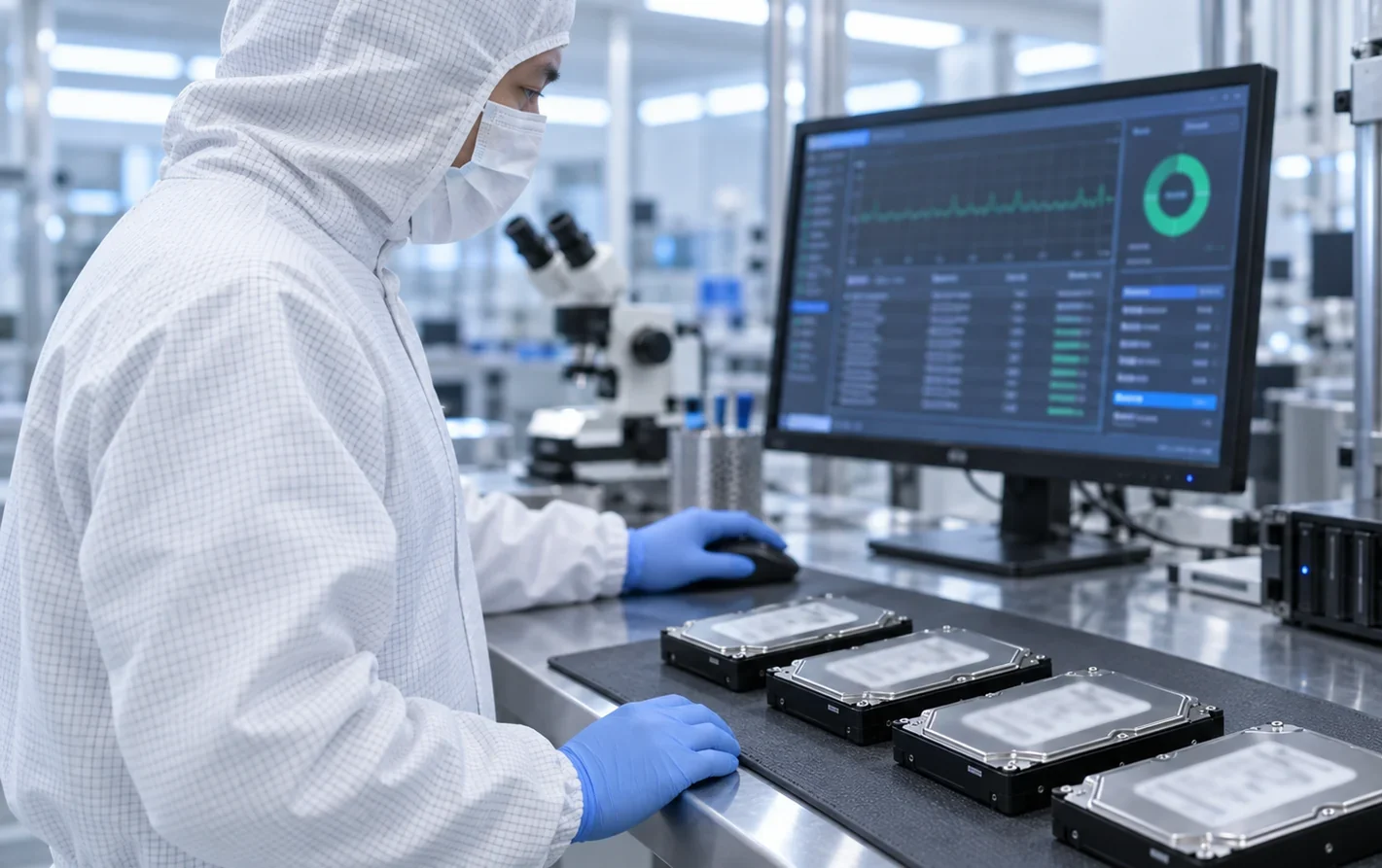
Call a lab the moment a drive clicks and holds data you care about. This is not a DIY situation — it needs a clean room, donor parts, and an engineer. The best thing you can do is stop powering it on and get it diagnosed quickly, while the platters are still intact.
CBL's clean-room lab recovers data from clicking and mechanically failed hard drives — free diagnosis, fixed quote before any work.
- WhatsApp: +65 8127 7508
- Call: +65 6588 0261
The bottom line
Hard drive clicking almost always means head failure — a mechanical problem no software can fix. The click is the sound of failing heads retrying, and every power-on cycle risks scratching your data away. So do the one thing that helps most: power the drive off, leave it off, skip the freezer-and-tapping myths, and get it into a clean room. Handled promptly, a clicking drive is often recoverable; run into the ground, it may not be.