
A hard drive crash is one of the most stressful things that can happen to a computer — one moment everything works, the next your files are unreachable and the drive is clicking, frozen, or simply gone from the system. But drive crashes are rarely random acts of fate. They have specific, understandable causes, most of which give warning signs and many of which are preventable. Understanding them is the best way to protect your data — and to react correctly if a crash does strike.
This guide from the engineers at CBL Data Recovery Singapore, who recover crashed drives every day, breaks down the 10 most common problems that crash hard drives in 2026, the early warning signs, how to prevent each, and what to do when it happens.
Logical vs physical crashes
Before the causes, one crucial distinction. A crash can be logical — the hardware is fine, but the file system or data is corrupted, deleted, or the drive shows as RAW — or physical, where the drive hardware itself has failed. Logical crashes are often safe to address with software; physical crashes are not, and running repair tools on failing hardware usually makes them worse. As we go through the causes, we'll flag which camp each tends to fall into, because knowing the difference can save your data.

The 10 most common causes of a hard drive crash
1. Overheating. Heat is the number-one killer of drives. Poor airflow, dust-clogged fans, or a hot environment cause components to degrade and fail over time. Overheating shortens a drive's life dramatically and can trigger sudden failure. Physical. Prevent it with good ventilation, regular dust removal, and keeping machines out of hot, enclosed spaces.
2. Power surges and sudden power loss. A spike from the mains, or an abrupt power cut while the drive is writing, can damage the drive's electronics or corrupt the data being written. Laptops are cushioned by their battery; desktops are exposed. Both physical and logical. A UPS or surge protector is cheap insurance.
3. Physical shock and drops. Mechanical hard drives are fragile while spinning — a knock or drop can crash the read/write heads into the platters, causing immediate, catastrophic failure. Physical. Never move a running laptop roughly, and handle external drives with care.
4. Age and mechanical wear. Every mechanical drive has moving parts that wear out. Motors seize, bearings fail, and heads degrade with years of use. Most drives last three to five years of regular use; pushing well beyond that invites failure. Physical. Replace ageing drives proactively rather than waiting for them to die.
5. Accumulating bad sectors. Small unreadable areas develop on a drive over time. A few are normal and get mapped out; a rapidly growing count signals the drive is deteriorating and heading for a crash. Physical (early). Monitor SMART health and back up the moment the count climbs.
6. Malware and ransomware. Malicious software can corrupt the file system, thrash the drive with writes, or encrypt everything and hold it to ransom. Logical. Keep your OS and security tools updated, be careful with downloads, and maintain an offline backup that ransomware can't reach.
7. Firmware corruption. Every drive runs internal firmware — its own tiny operating system. If it becomes corrupted, the drive may be detected with the wrong capacity, a strange name, or not at all, even though the platters are fine. Physical/specialist. This needs professional tools; DIY attempts typically fail.
8. Water, humidity and liquid damage. Spills, floods, and even high humidity cause corrosion on a drive's circuit board and internals. Corrosion is ongoing, so time matters. Physical. If a drive gets wet, do not power it on — corrosion plus power equals rapid, permanent damage.
9. Manufacturing defects. Some drives simply fail early due to a defect. These are unpredictable, which is exactly why no single drive should ever hold your only copy of important data. Physical. A backup is the only real defence.
10. Human error. Accidental formatting, deleting the wrong partition, or a botched OS install can "crash" a perfectly healthy drive by wiping its structure. Logical. Often recoverable if you stop immediately and don't overwrite the drive — but a rushed reformat or reinstall can finish the job.
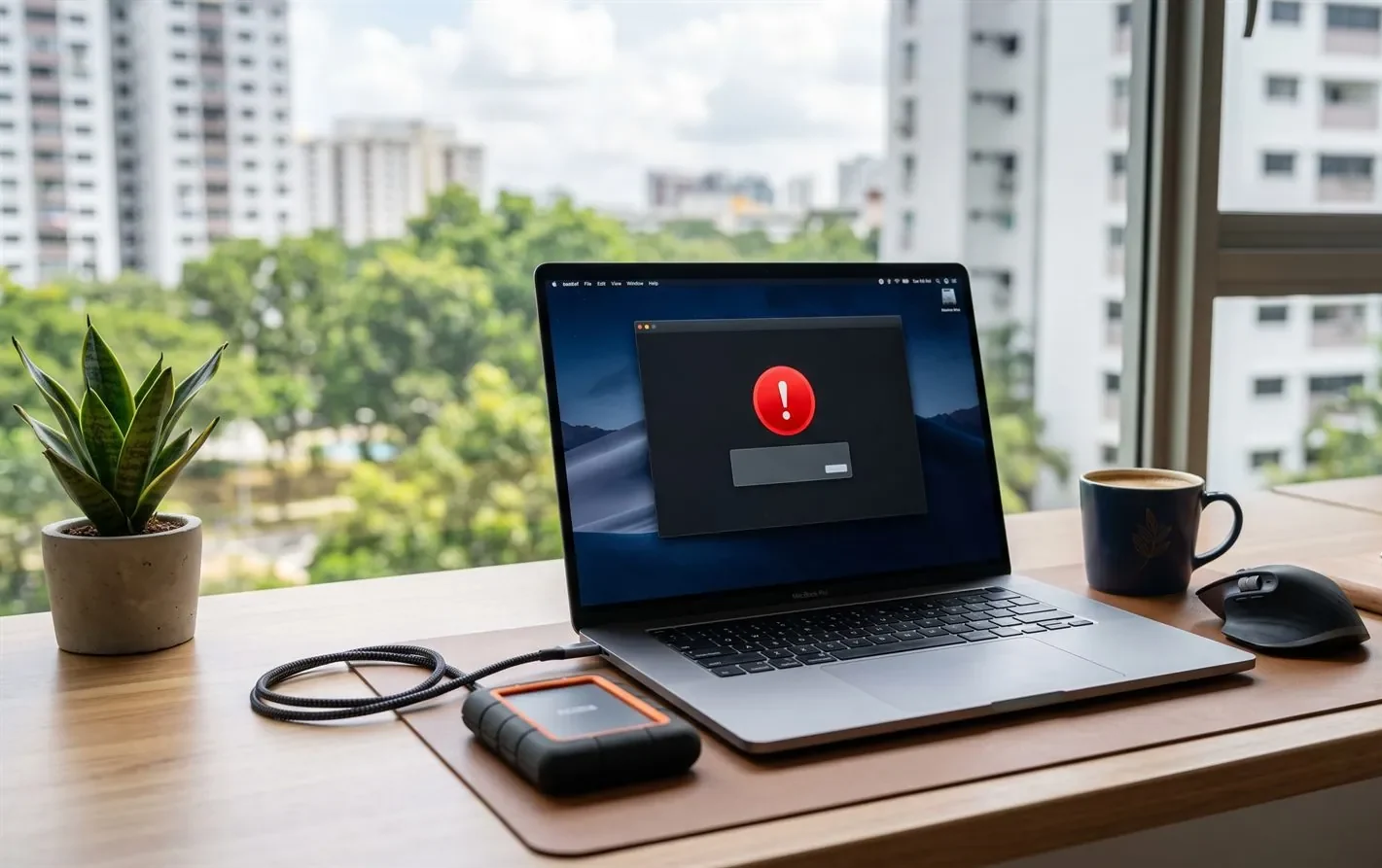
Warning signs a crash is coming
Drives usually hint before they fail completely. Treat these as urgent prompts to back up now:
- Clicking, buzzing or grinding noises — a classic sign of imminent mechanical failure.
- Frequent freezes or crashes when accessing certain files or folders.
- Files that disappear, won't open, or become corrupted for no clear reason.
- The drive vanishing intermittently from the system, or taking a long time to appear.
- SMART warnings or a rising reallocated-sector count in a tool like CrystalDiskInfo.
- Slower and slower performance that maintenance doesn't fix.
How to prevent a hard drive crash
You can't make a drive immortal, but you can stack the odds heavily in your favour:
- Keep it cool and dust-free — the single biggest factor in drive longevity.
- Protect against power problems with a UPS or surge protector, and shut down cleanly.
- Handle drives gently and never move a running machine roughly.
- Monitor SMART health monthly so you get early warning before a failure.
- Keep malware off the system and be cautious with downloads and email attachments.
- Replace ageing drives before they reach the high-risk end of their life.
- Above all, keep a current backup. No prevention makes a drive immortal — a good backup routine turns any crash from a catastrophe into an inconvenience.
If the drive is clicking, not detected, or behaving strangely, don't run repair tools, reformat, or keep restarting it. Those actions can turn a recoverable crash into permanent loss. Power down and get it assessed. See our hard drive recovery and clicking-noise guides.
What to do when a crash happens
The right response depends on which type of crash it is. If the drive is detected and spins normally but files are missing or corrupted, it's likely logical — careful recovery software may help. If the drive is clicking, not detected, or was dropped or wet, it's physical, and every power-on risks the data. In that case, stop, and let a professional lab image and recover it. The worst outcomes we see come from running repair tools or reinstalling an OS on a physically failing drive.
CBL's cleanroom lab recovers data from crashed, clicking and failed drives every week — free diagnosis, fixed quote before any work.
- WhatsApp: +65 8127 7508
- Call: +65 6588 0261