
There's a specific message that strikes fear into anyone with important files on an external drive: "You need to format the disk in drive X: before you can use it." It appears out of nowhere, for a drive that worked yesterday, and it feels like an ultimatum — format and lose everything, or lose access entirely. Here's the crucial truth: you should not click format, and you almost certainly don't need to. The data is still there, hidden behind a damaged file system. This guide explains how to recover data from an external hard drive without formatting in 2026.
From the engineers at CBL Data Recovery Singapore, who see this exact scenario every week.
Why the drive asks to be formatted (and why not to)
When an external drive shows as RAW or its file system is corrupted, the computer can't read the index that tells it where your files are — so it assumes the drive is blank and offers to format it, which would create a fresh, empty file system so you can use the drive. But formatting builds that empty structure over your existing data, drastically reducing what can be recovered. The files themselves are usually still physically present; it's the map to them that's damaged. So the format prompt isn't telling you the data is gone — it's telling you the file system is corrupt. Decline it, and recover the data first.
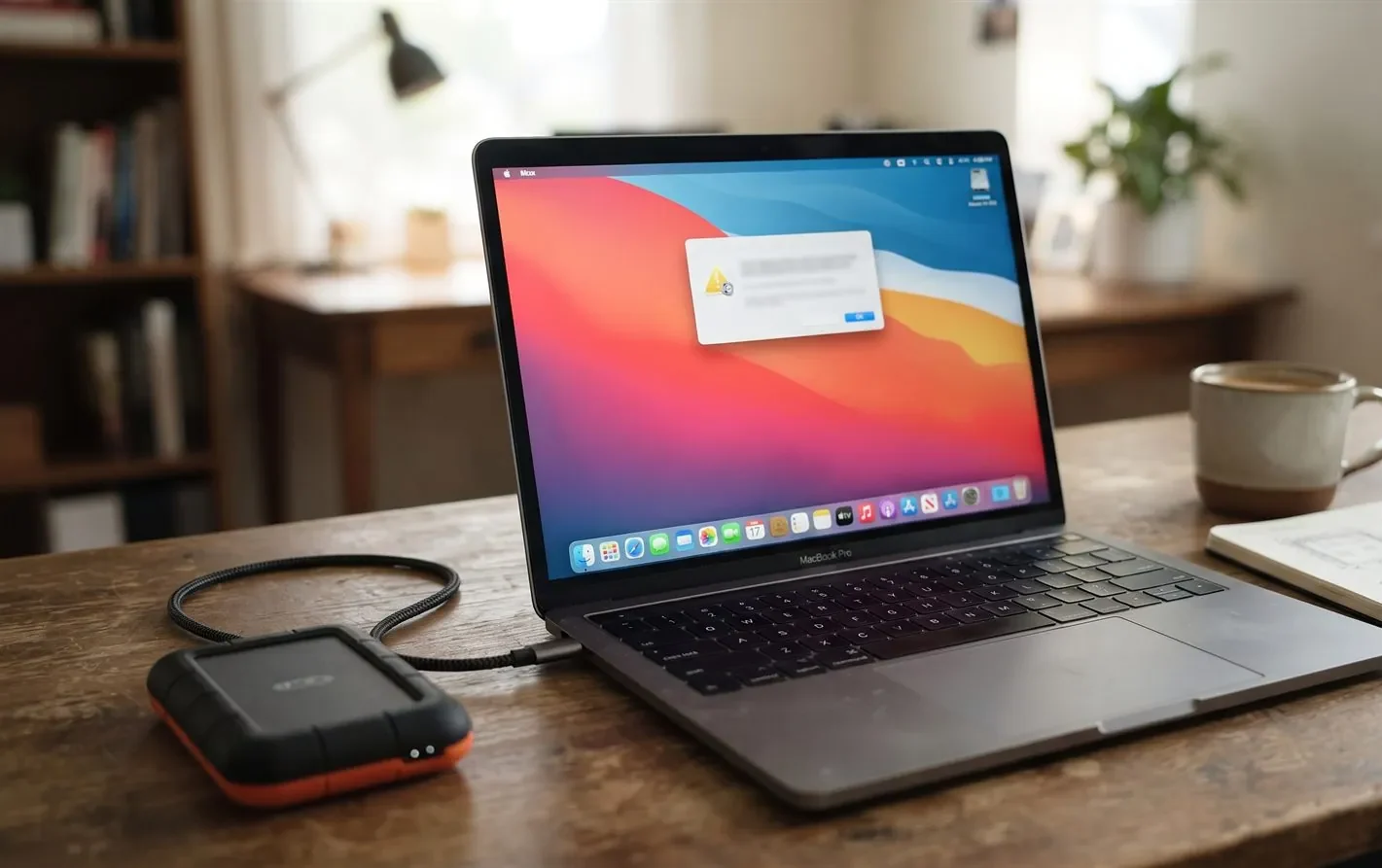
How to recover without formatting, step by step
1. Click Cancel, not Format. When the prompt appears, decline it every time. Don't let any program format, initialise, or "repair" the drive by writing to it.
2. Rule out simple causes. Try a different cable, port and computer. A bad connection can occasionally trigger a read error that looks like corruption. If the drive reads fine elsewhere, great — copy your data off immediately.
3. Check Disk Management / Disk Utility. Confirm the drive appears (it usually does, as RAW or without a file system). This tells you it's a logical problem, not a dead drive. Don't initialise or format it here either.
4. Try to check the file system carefully. On Windows, chkdsk X: /f can sometimes repair the corruption and restore access without data loss — but it writes to the drive, so if the data is critical and irreplaceable, skip straight to recovery software instead, because a failed chkdsk on a bad drive can worsen things.
5. Run recovery software (the safe route). This is the reliable method. Use Recuva, Disk Drill, PhotoRec, or TestDisk — installed on a different drive — to scan the RAW/corrupted external drive read-only and recover your files to a separate location. TestDisk can also rebuild a corrupted partition structure, sometimes restoring the drive to normal without data loss. PhotoRec recovers files by signature even when the file system is unreadable.
6. Verify, then reformat only if needed. Once your files are safely recovered and confirmed intact, you can format the drive to reuse it — but only after, and only if the drive is physically healthy.

What causes this, and what to avoid
The "format the disk" error usually comes from file-system corruption — caused by unsafe removal, a power cut mid-write, malware, or the early stages of drive failure. The mistakes that turn a recoverable situation into a permanent loss are:
- Clicking Format — the number-one way people lose recoverable data here.
- Letting Windows "repair" or initialise the drive, which writes over the structure.
- Running
chkdskon a physically failing drive, which can worsen the damage. - Continuing to use the drive, risking overwriting the recoverable files.
A "format the disk" error combined with clicking, buzzing, or the drive not spinning means physical failure, not just corruption. Don't run chkdsk or format — that can destroy the data. Stop and get it assessed. See our external hard drive recovery service.
When to call a lab
Call a lab when the drive that asks to be formatted is also clicking or not spinning, when DIY software can't read it, when it's physically damaged, or when the data is irreplaceable and you'd rather not risk DIY. Labs image the drive first and rebuild the file system from the image, so the fragile original is never stressed. Because a wrong click (format) or a failed repair can destroy recoverable data, getting a diagnosis early is the safest path.
CBL's cleanroom lab recovers data from RAW, corrupted and failed external drives — free diagnosis, fixed quote before any work.
- WhatsApp: +65 8127 7508
- Call: +65 6588 0261

How to prevent it happening again
- Always eject safely before unplugging — unsafe removal is the top cause of this corruption.
- Use a UPS on desktops so a power cut doesn't corrupt a drive mid-write.
- Keep malware off the system with updates and caution.
- Keep a backup, so a corrupted drive is a non-event. See our data backup tactics.
Frequently Asked Questions
My external drive says I need to format it. Can I recover the data without formatting?+
What happens if I click Format?+
Will CHKDSK fix a drive that asks to be formatted?+
chkdsk X: /f can repair the file system. But it writes to the drive, so on a failing drive or with irreplaceable data, use recovery software first to avoid making things worse.Why did my external drive suddenly ask to be formatted?+
The drive is clicking and asks to be formatted. What now?+
chkdsk — stop using it and consult a lab. Contact us for a free diagnosis.