
An external hard drive that suddenly won't work — not showing up, not spinning, or throwing errors — is a common and stressful problem, especially when it holds your backups, photos, or the only copy of important files. The good news is that many "not working" external drives have simple, fixable causes, and the data is usually still intact. The key is to work through the fixes from safest to most serious, and to recognise the signs that mean you should stop before making things worse. This guide explains how to fix external drives that aren't working in 2026, safely.
From the engineers at CBL Data Recovery Singapore, who recover external drives every week.
Work out what's wrong first
External drive problems fall into a few categories, and identifying yours guides the fix:
- Not detected at all — no drive letter, no notification. Often a cable, port, power, or USB-bridge issue; sometimes drive failure.
- Detected but not accessible — shows in Disk Management but won't open, or appears as RAW. Usually file-system corruption, with the data intact.
- Not spinning or making noise — clicking, buzzing, or silent. This points to a mechanical or power fault, and needs care.
- Intermittent — connects and disconnects. Often a failing cable, port, or bridge board.
The crucial thing to establish is whether the drive is physically healthy. If it spins normally and the issue is a connection or file system, fixes are safe. If it clicks or won't spin, stop and treat it as failure.
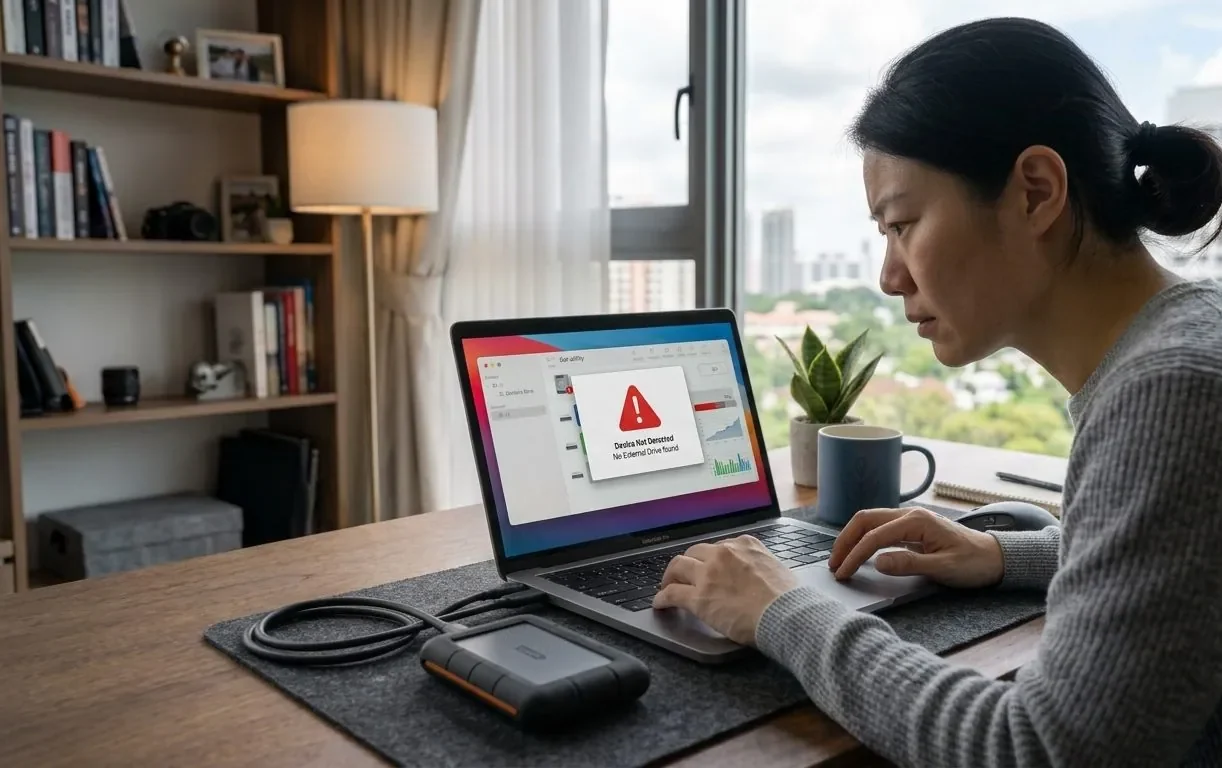
Safe fixes to try, in order
1. Try a different cable, port and computer. The most common cause of a "dead" external drive is a faulty cable or port. Use a known-good cable (ideally the original), try every port, avoid unpowered hubs, and test on another computer. This resolves a large share of cases.
2. Check the power. Desktop external drives need their power adapter — confirm it's working and the drive is getting power. If the drive doesn't spin up at all with a known-good cable and power, that points to a fault.
3. Check Disk Management (Windows) or Disk Utility (Mac). Even without a drive letter, the drive may appear here. If it shows but has no letter, assigning one can restore access. If it shows as RAW or unallocated, that's corruption — recover before repairing, and don't initialise or format it.
4. Update or reinstall the USB driver. In Windows Device Manager, uninstalling the drive and reconnecting can reload a corrupted driver — a quick, harmless step.
5. Run a check for logical errors (carefully). For a detected drive with minor corruption, chkdsk can help — but it writes to the drive, so don't run it on a drive you suspect is failing or that holds your only copy of critical data without recovering first.
6. Recover the data with software. If the drive is detected but shows as RAW or won't open, run recovery software (Recuva, Disk Drill, PhotoRec, TestDisk) to scan it read-only and recover files to a different drive — before attempting any repair or format.
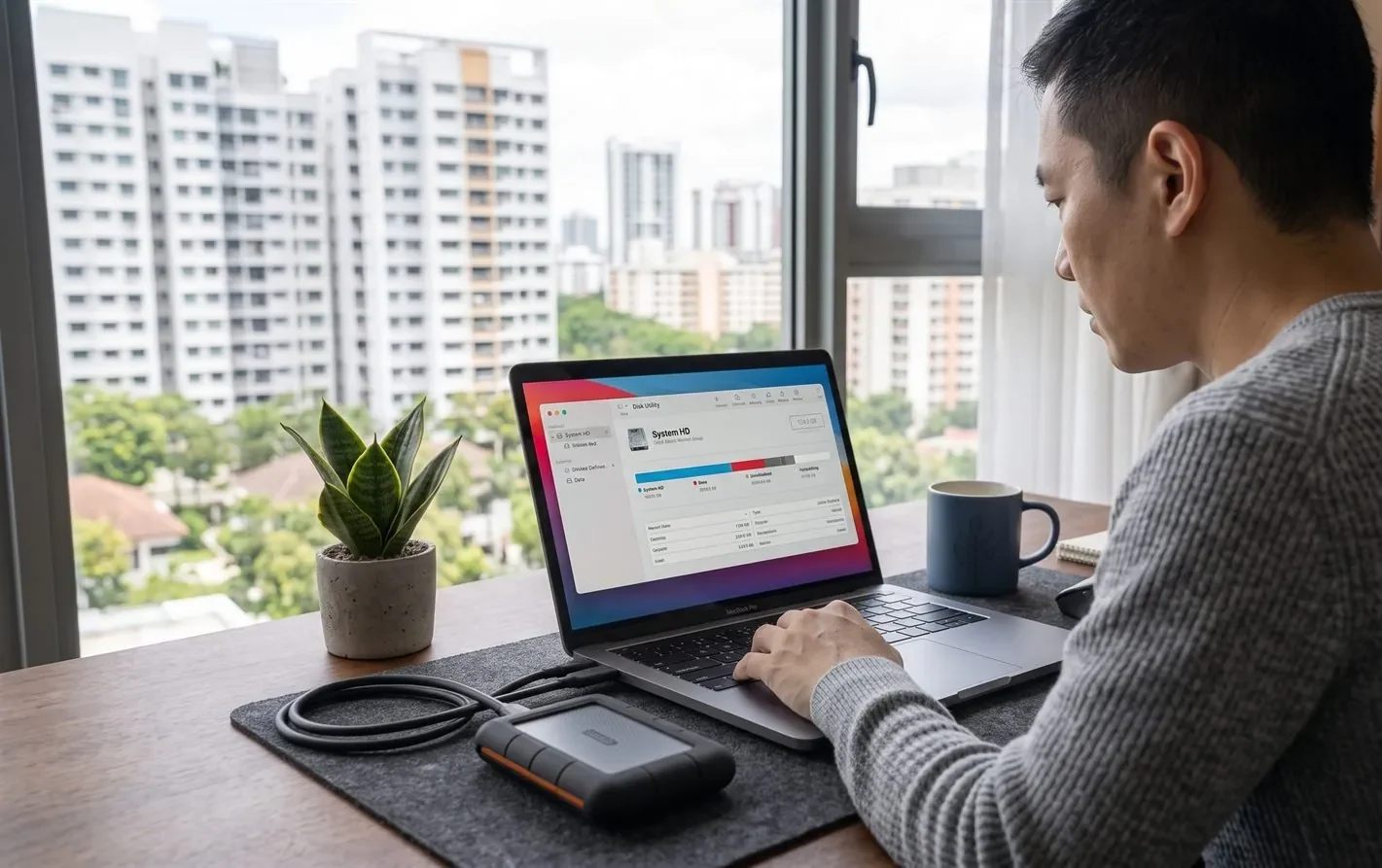
The signs that mean stop
Some symptoms mean the drive is physically failing, and DIY fixes won't help — they'll make it worse:
- Clicking, buzzing, or grinding — mechanical failure in progress.
- Not spinning up at all with known-good power and cable — a motor, board, or power fault.
- A burning smell or visible damage — electronic failure.
- The drive was dropped or got wet — physical damage.
In these cases, stop using the drive immediately. The data is usually still on the platters or chips, but reaching it needs a lab.
If an external drive clicks, won't spin, or was dropped or wet, repeatedly plugging it in or forcing it won't fix it and can destroy recoverable data. Stop and get it assessed. See our external hard drive recovery service.
When to call a lab
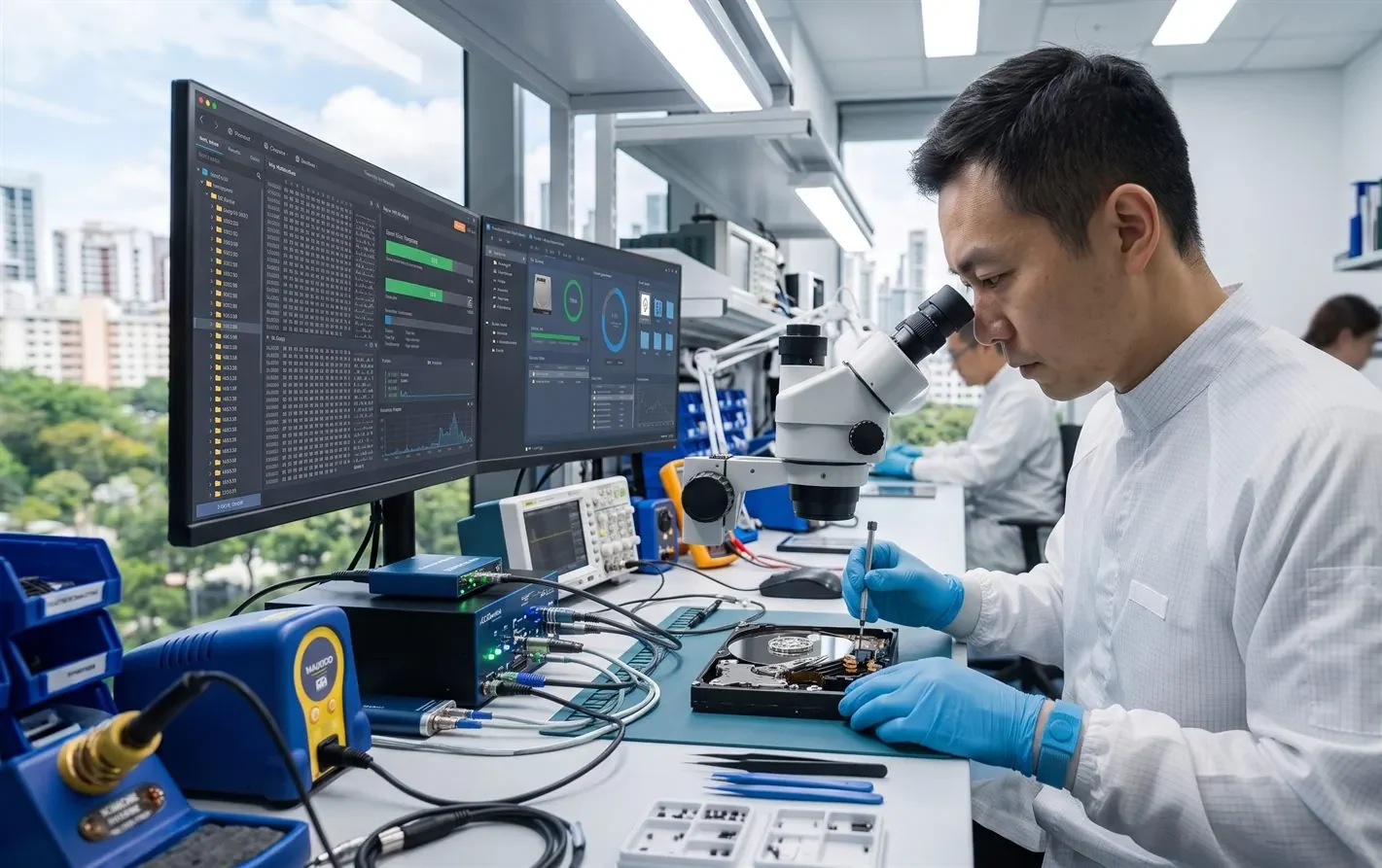
Call a lab when the external drive is clicking, not spinning, or not detected after trying different cables and computers; when it's physically damaged or water-damaged; or when DIY software fails on irreplaceable data. Labs repair bridge boards, handle drive encryption, and perform cleanroom recovery on mechanically failed drives — none of which DIY can do. Because forcing a failing drive can destroy it, stopping early protects your data.
CBL's cleanroom lab recovers data from failed, unrecognised and damaged external drives — free diagnosis, fixed quote before any work.
- WhatsApp: +65 8127 7508
- Call: +65 6588 0261
How to avoid external drive problems
- Eject safely before unplugging — the most common cause of corruption.
- Use quality cables and avoid unpowered hubs for drives that need more power.
- Handle portable drives gently — a knock while spinning can crash the heads.
- Keep a backup so a failed external drive is an inconvenience, not a loss. See our data backup tactics.
Frequently Asked Questions
Why is my external hard drive not showing up?+
My external drive shows in Disk Management but won't open. What do I do?+
My external drive isn't spinning. Can it be fixed?+
Is it safe to run CHKDSK on an external drive?+
chkdsk.