
A laptop that won't turn on, won't boot into your operating system, or has suddenly lost your files is deeply stressful — it holds your work, photos, and often the only copy of things you can't replace. The encouraging news is that the data is usually still intact; the problem is frequently the laptop, not the storage. The catch is that modern laptops make recovery trickier than desktops, because storage is increasingly soldered and encrypted. This guide explains how laptop data recovery works in 2026, for both Windows and Mac, and how to get your files back safely.
From the engineers at CBL Data Recovery Singapore, who recover laptop data every week.
Work out what failed
Laptop data loss falls into distinct categories, and identifying yours guides the solution:
- Won't power on — often a power, battery, or motherboard fault, with the storage and data intact.
- Powers on but won't boot — errors, blue screens, or a spinning wheel; frequently a software or OS issue with the data safe.
- Storage failure — the drive or SSD isn't detected, or throws errors. The serious case, to handle carefully.
- Deleted, formatted, or corrupted data on a working laptop — a logical problem, often DIY-recoverable.
- Physical or liquid damage — dropped or spilled on, needing careful handling.
The crucial question is whether the storage is healthy. If the laptop is dead but the storage is fine, recovery is often straightforward — with an important modern caveat below.
That distinction matters for a second reason. If the storage turns out to be healthy and what you actually need is the laptop itself working again — a screen, a battery, a charging port, a board fault — that is repair work rather than recovery, and CBL does not repair devices. iDevice’s component-level laptop repair, a separate company in the same building, covers that side of it.

Older laptops: remove the drive and read it
On older laptops with a removable drive (a 2.5" SATA drive or an M.2 NVMe stick), recovery from a dead-but-otherwise-healthy machine is simple: power down, open the access panel, remove the drive, connect it to another computer with a USB adapter or enclosure, and copy your files off. This bypasses the broken laptop entirely — the same easy route that makes desktop recovery so straightforward.
Modern laptops: the soldered-storage challenge
Here's where modern laptops differ. Many current laptops — especially ultrabooks and all MacBooks — have soldered storage that can't be removed, and often hardware encryption (BitLocker on Windows business laptops, Apple's encryption on Macs). This means:
- You can't simply pull the drive and read it elsewhere.
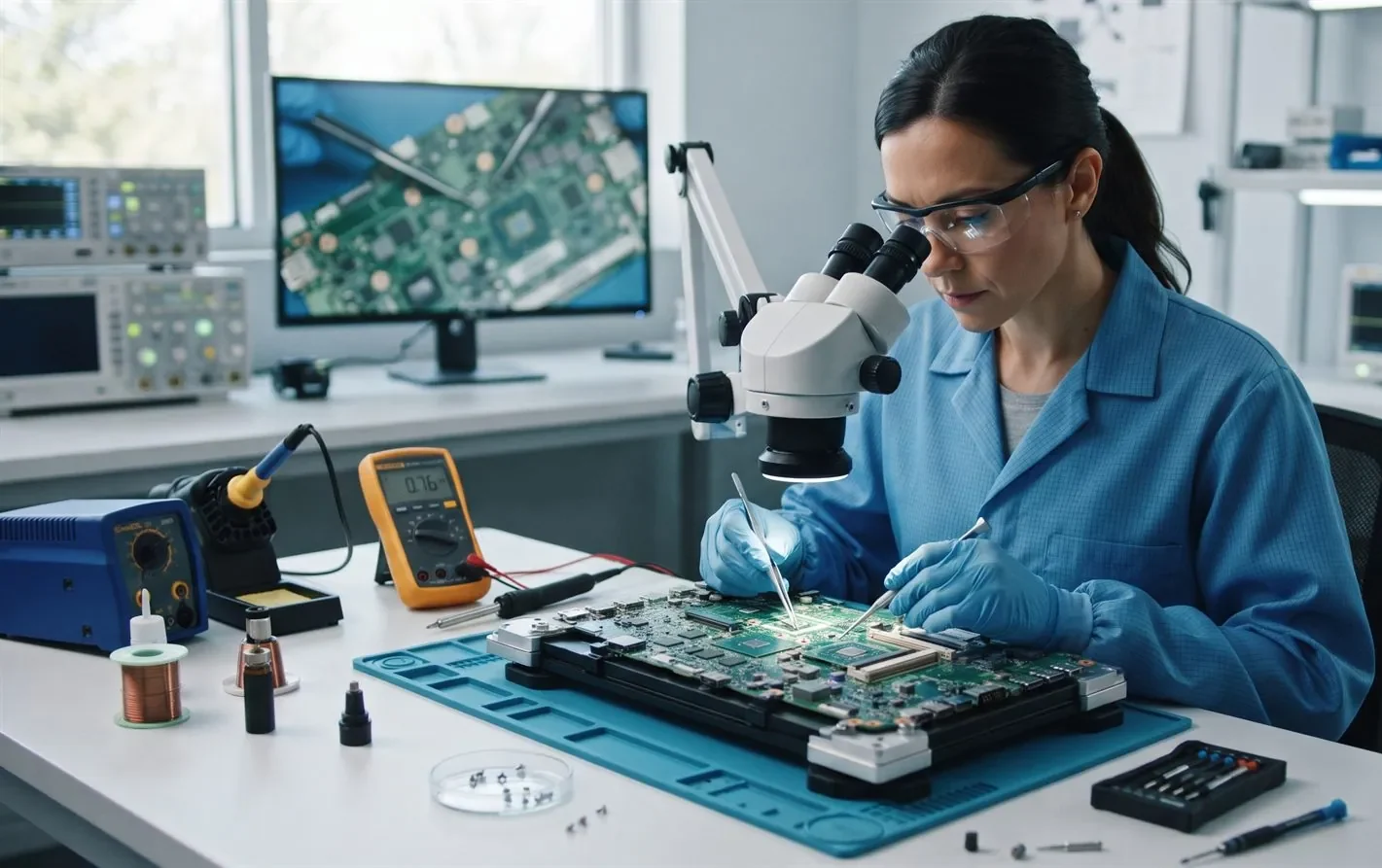
- Recovering a dead modern laptop usually requires board-level repair to revive the machine enough to read its own storage.
- Encryption keys (BitLocker recovery key, or your Mac password) are needed to decrypt the data — locate them early.
None of this makes recovery impossible — it just means a dead modern laptop is a lab job rather than a DIY drive-swap. The encouraging part is that the storage chips usually survive the failures that kill a laptop, so the data is typically still there.
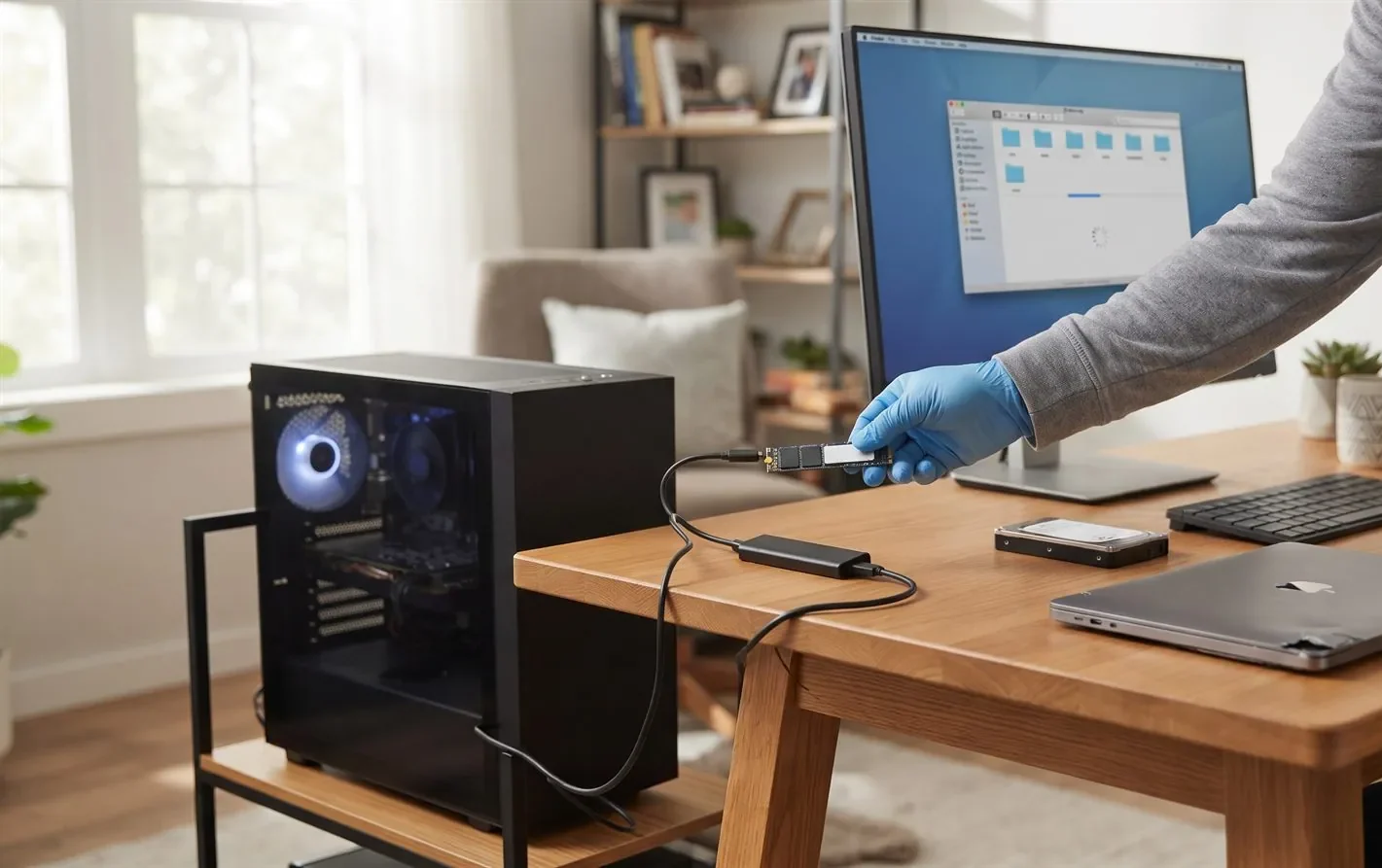
For deleted, formatted, or corrupted data
If the laptop works but files are deleted, formatted, or the drive shows as RAW:
- Stop using it to avoid overwriting recoverable data.
- Don't format a drive that shows as RAW if you want the data.
- Run recovery software (Recuva, Disk Drill, PhotoRec, TestDisk) from a different drive, recovering to a separate location.
- On Apple Silicon Macs and TRIM SSDs, deleted data with no backup is often unrecoverable — check Time Machine, iCloud, or Windows backups first.
Repeatedly forcing a dead laptop to start, or powering on a liquid-damaged one, can worsen the damage. If the storage is soldered or the laptop is physically damaged, it's a lab job — stop and get it assessed. See our data recovery services and, for Macs, our Mac data recovery.
When to call a lab
Call a lab when the laptop won't power on and has soldered storage, when the drive has failed (clicking, not detected), when it's physically or liquid-damaged, or when the data is irreplaceable. Labs work at board level to make the storage readable, handle encryption, and recover from soldered NVMe — capabilities DIY can't match. Because the storage usually survives the failures that kill a laptop, the data is typically recoverable when handled correctly.
CBL's cleanroom lab recovers data from dead, damaged and failed laptops — Windows and Mac — free diagnosis, fixed quote before any work.
- WhatsApp: +65 8127 7508
- Call: +65 6588 0261
How to protect your laptop data
- Back up regularly to an external drive and the cloud, so a dead laptop is an inconvenience, not a loss. See our data backup tactics.
- Store your encryption key safely (BitLocker key in your Microsoft account; know your Mac password).
- Handle it carefully — laptops get dropped and spilled on; a case helps.
- Keep it cool and don't block vents — heat shortens drive and component life.