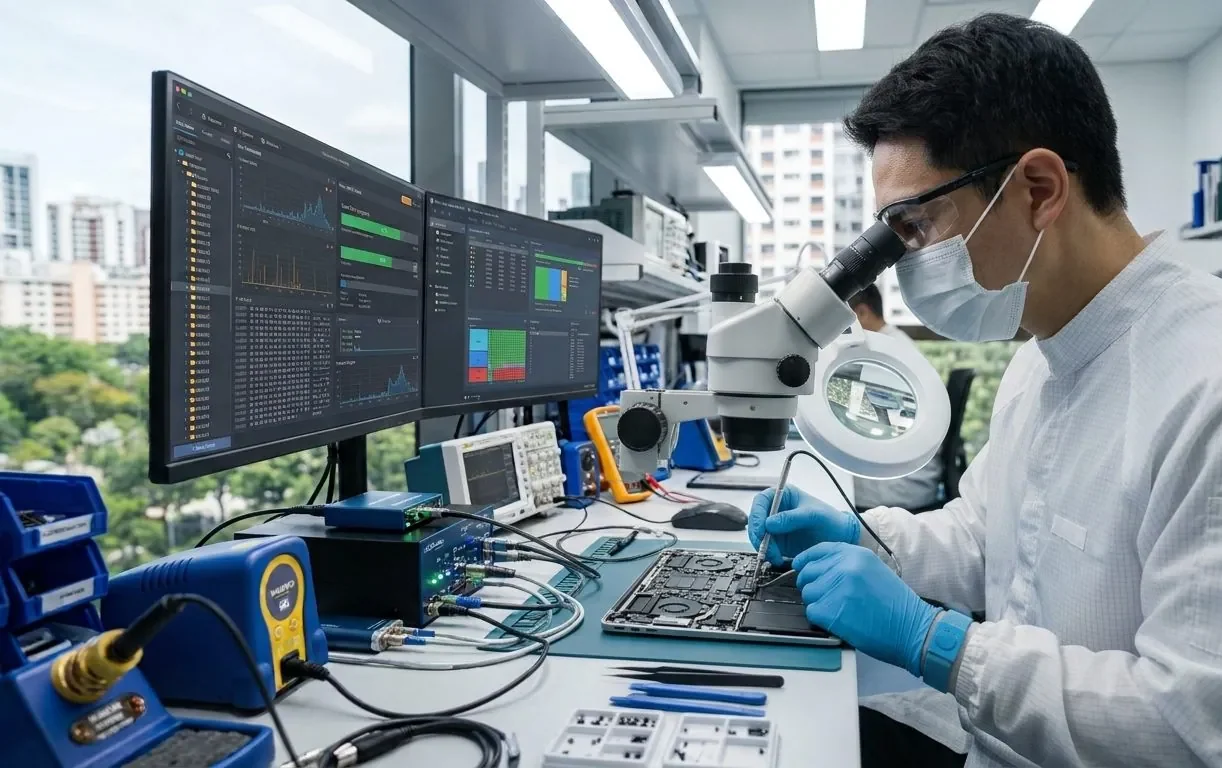
A damaged MacBook — one that won't power on, took a spill, was dropped, or won't boot past the Apple logo — is stressful precisely because so much lives on it: photos, documents, projects, and often the only copy. The reassuring news is that the data is frequently still intact on the storage. The challenging news is that modern MacBooks make recovery harder than older ones, because the storage is soldered to the board and everything is encrypted. This guide explains how to recover data from a damaged MacBook in 2026, what's realistic, and the mistakes that make things worse.
From the engineers at CBL Data Recovery Singapore, who recover data from damaged Macs every week.
Why modern MacBook recovery is different
On older MacBooks (pre-2016 or so), the SSD was often a removable module — if the computer died, you could pull the drive and read it elsewhere. On modern MacBooks (Apple Silicon and recent Intel), that's no longer possible for two reasons:
- The storage is soldered to the logic board. You can't simply remove the SSD, because the NAND chips are part of the board.
- Everything is encrypted and tied to the Mac's security chip. The data is protected by hardware encryption bound to the Apple Silicon (or T2) chip. The storage can only be decrypted together with its original processor.
Together, these mean that recovering a dead modern MacBook usually requires repairing the logic board enough to boot the machine and read its own storage — not swapping the drive into another computer. It's more involved, but very much possible in a lab.
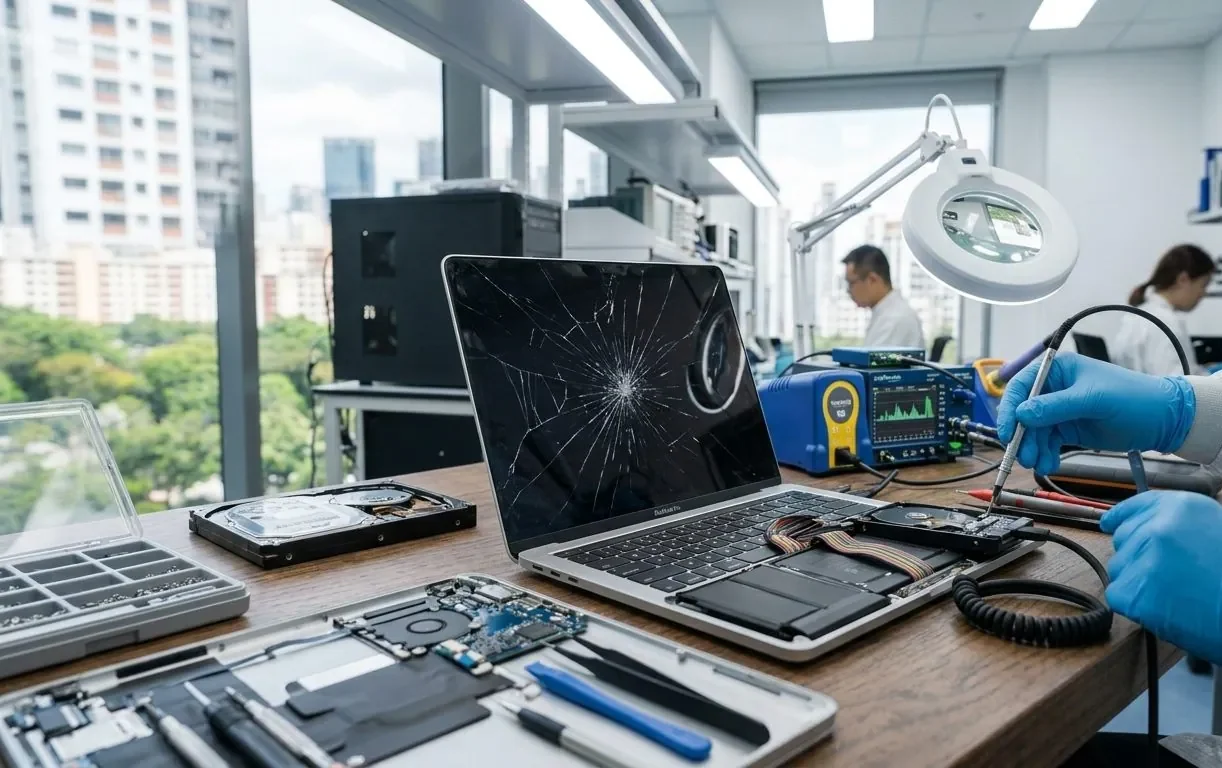
Recovery by type of damage
MacBook won't turn on. Often a power, battery, or logic-board fault while the storage is intact. If it's a simple issue (a dead battery, a charging fault), reviving the machine restores access. For a board fault, board-level repair to boot the Mac and read its storage is the route.
Water or liquid damage. Liquid causes corrosion on the board, and time matters — corrosion is ongoing. Do not try to turn it on or charge it; power plus moisture accelerates the damage. Professional cleaning and board repair can often revive it enough to extract the data if the storage and CPU survived.
Dropped or physically damaged. Impact can crack the board or damage components. Recovery depends on whether the storage NAND and the CPU (which holds the encryption keys) survived — usually they do, and board repair reaches the data.
Won't boot (software). A Mac stuck on the Apple logo or in a boot loop often has a software problem with the data intact. In some cases, booting into Recovery Mode or Target Disk / Share Disk mode can copy data off — but on a healthy encrypted Mac you'll need the login credentials.
What you can try safely at home
Before a lab, a few safe steps for a Mac that still powers on but won't boot normally:
- Boot into macOS Recovery and use Disk Utility to check the drive, or Terminal to copy files to an external drive (you'll need your password to unlock the encrypted volume).
- Use another Mac with Share Disk / Target Disk Mode to access the drive, again with credentials.
- Restore from Time Machine or iCloud if you have a backup — the fastest, safest recovery of all.
If the Mac won't power on at all, is water-damaged, or shows signs of hardware failure, stop — home methods won't help, and forcing it can worsen the damage.

The mistakes that make it worse
- Powering on or charging a water-damaged Mac — accelerates corrosion and can destroy the storage or CPU.
- Repeatedly forcing a dead Mac to start — each attempt on a damaged board risks further electrical damage.
- Erasing and reinstalling macOS to "fix" it before securing your data — this can wipe recoverable files.
- Handing it to a general repair shop for a "fix" before the data is secured — a repair aimed at making the Mac usable can differ from one aimed at protecting the data.
A repair that gets your MacBook working again isn't the same as a recovery that protects your data — and a botched repair can destroy recoverable files. If the files matter more than the machine, secure the data first. See our Mac data recovery service.
Once the files are safe, getting the machine itself working again is a separate job, and not one CBL does — you receive your recovered files, not a repaired MacBook. Board-level MacBook repair at iDevice, a separate company in the same building, covers screens, batteries and logic boards.
When to call a lab
Call a lab when the MacBook won't power on, is water-damaged, was dropped and won't work, or holds irreplaceable data with no backup. Because modern Macs have soldered, encrypted storage, recovery requires board-level repair and the ability to read the storage with its original processor — specialist lab work that DIY and general repair shops can't do. And because the storage usually survives the failures that kill a MacBook, the data is typically still there, waiting to be reached.
CBL's cleanroom lab recovers data from dead, water-damaged and dropped MacBooks — free diagnosis, fixed quote before any work.
- WhatsApp: +65 8127 7508
- Call: +65 6588 0261