
Partitioning — dividing a single physical drive into separate logical sections — is one of those tech topics people either swear by or never think about. Done thoughtfully, custom partitions can make your storage tidier, easier to manage and back up, and in some cases safer. Done carelessly, partitioning is also one of the fastest ways to wipe your data. This guide explains how custom hard disk partitions can optimize your storage in 2026 — the real benefits, how to do it safely, and the data-loss risks every user should know.
From the engineers at CBL Data Recovery Singapore, who recover data from repartitioning gone wrong every week.
What partitioning is and why it helps
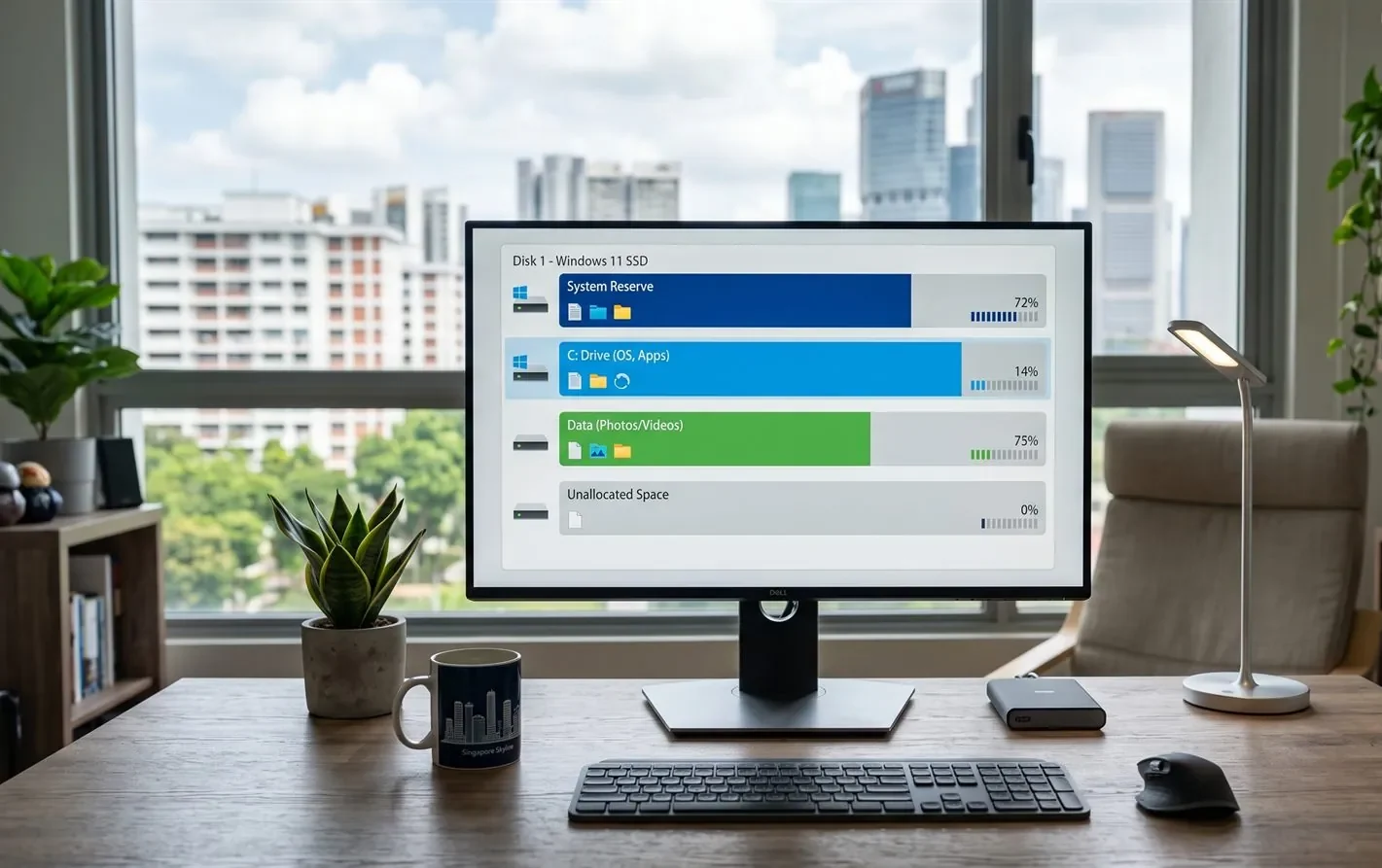
A partition is a logical division of a physical drive that the operating system treats as a separate drive (like C: and D: on Windows). Custom partitioning can optimize storage in several ways:
- Separate your OS from your data. Keeping Windows/macOS on one partition and your files on another means you can reinstall the OS without touching your data — a genuine safety and convenience win.
- Easier organisation and backup. Dedicated partitions for data, projects, or media make files easier to find and back up selectively.
- Multi-boot setups. Partitions let you run more than one operating system on a drive.
- Contain problems. Corruption or a full partition affects only that section, not the whole drive.
For many users, a simple two-partition setup (system + data) is the sweet spot.
How to partition safely
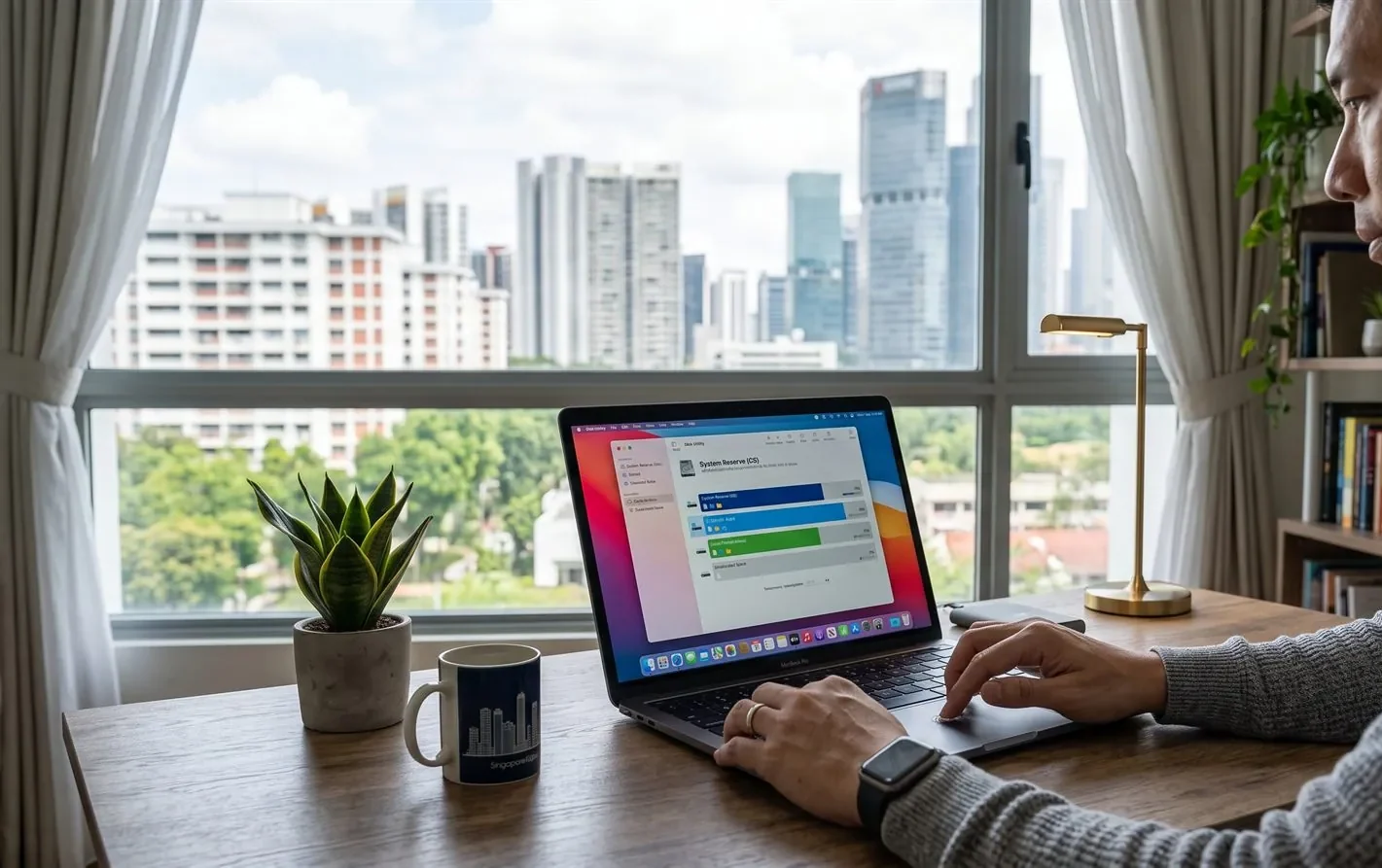
Whether on Windows (Disk Management) or Mac (Disk Utility), partitioning is straightforward — but the golden rule is back up first, because partition operations touch the drive's structure:
- Back up your data. Before any partition change, copy your important files elsewhere and verify them. This is the step that prevents disasters.
- Use the built-in tools. Windows Disk Management (or
diskpart) and macOS Disk Utility can create, resize, and delete partitions. Third-party tools (like MiniTool Partition Wizard) offer more flexibility. - Shrink before you split. To create a new partition from free space, shrink an existing one first, then create the new partition in the freed space.
- Double-check which drive and partition you select. Selecting the wrong one — or formatting the whole disk — is the classic, costly mistake.
- Choose the right file system for each partition (NTFS/exFAT/APFS as appropriate).
Done carefully, partitioning is safe and reversible; done in a hurry on the wrong drive, it isn't.
The data-loss risks (and how partition loss happens)
Partitioning is also a leading cause of the data-loss cases we see. The risks:
- Formatting or deleting the wrong partition — instantly wipes access to that data.
- A failed or interrupted resize — a power cut or crash mid-operation can corrupt the partition table, making partitions vanish.
- Accidentally initialising a drive — creating a fresh, empty partition structure over existing data.
- A corrupted partition table — from malware, a bad shutdown, or a failing drive, causing partitions to disappear or show as RAW.
The good news: lost partitions are often recoverable. When a partition "disappears" or shows as RAW, the data is usually still physically present — it's the partition table (the map) that's damaged. Tools like TestDisk can rebuild a lost partition table, and recovery software can retrieve files from a deleted or corrupted partition, as long as it hasn't been overwritten.
When a partition vanishes or shows as RAW, Windows may prompt you to initialise or format the disk — decline both if you want the data. They create an empty structure over your files. Recover the partition or its data first. See our hard drive recovery service.
When partitioning goes wrong: recovery
If you've deleted the wrong partition, a resize failed, or partitions have vanished:
- Stop using the drive to avoid overwriting the data.
- Don't format or initialise the drive.
- Try TestDisk — the free tool can often rebuild a lost or corrupted partition table, restoring your partitions and their data.
- Or run recovery software to retrieve files from the lost partition to a different drive.
- For irreplaceable data or a failing drive, consult a lab.
When to call a lab
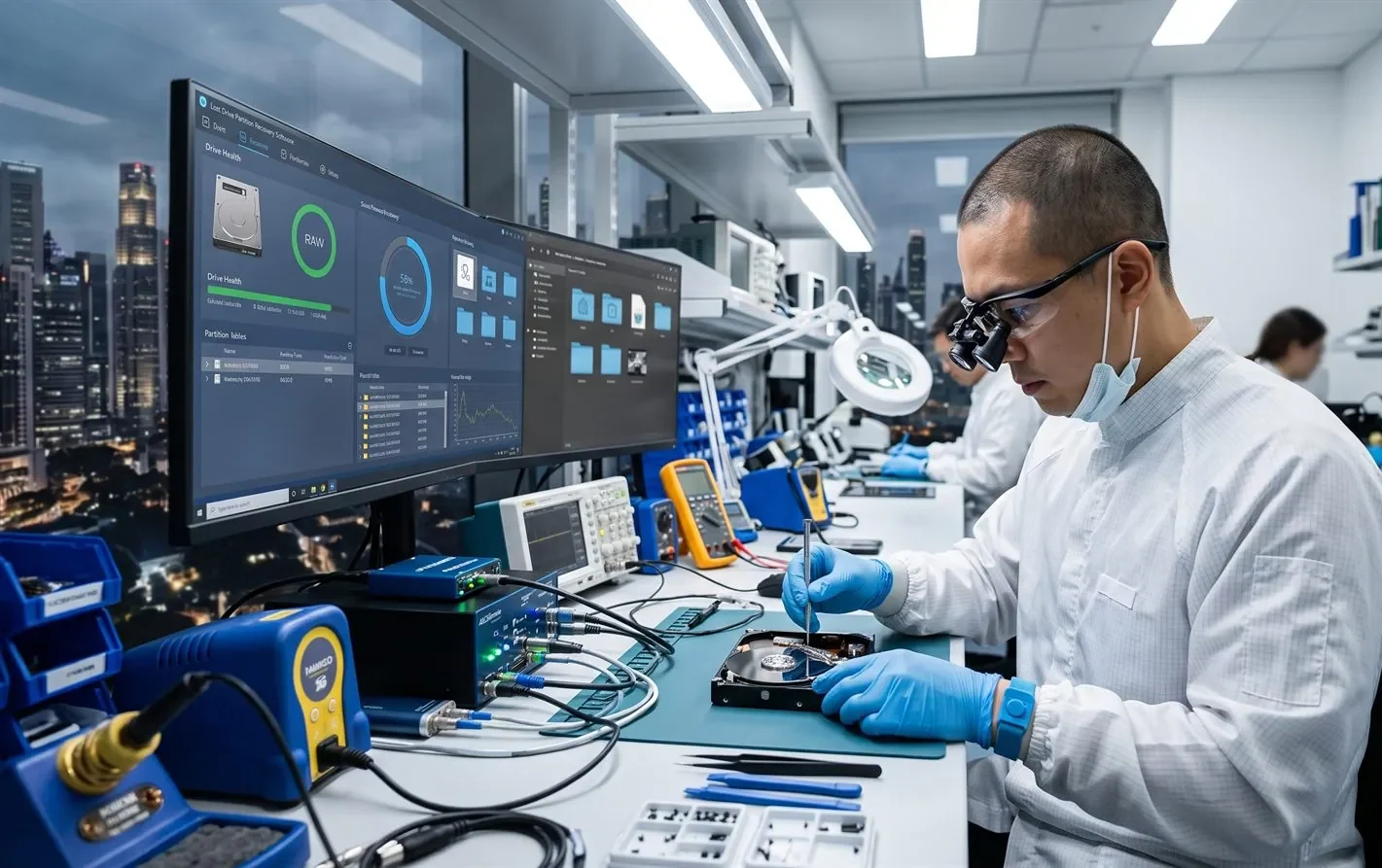
Call a lab when a partition disappeared and DIY tools can't rebuild it, when the data is irreplaceable, when the drive is also physically failing, or when an accidental format has occurred over important data. Labs can reconstruct partition structures and recover data that software can't. Because continued use overwrites recoverable data, stopping early protects your files.
CBL's cleanroom lab recovers data from lost partitions and repartitioned drives — free diagnosis, fixed quote before any work.
- WhatsApp: +65 8127 7508
- Call: +65 6588 0261
Best practices for partitioning
- Always back up before any partition change — the single most important rule.
- Keep OS and data on separate partitions for easier reinstalls and backups.
- Don't over-partition — too many small partitions can waste space and complicate management.
- Use a UPS during partition operations so a power cut doesn't corrupt the partition table.
- Verify after changes that everything mounts and your data is intact. See our data backup tactics.