
A NAS is where households and businesses keep their most important data — photos, backups, projects, entire company file shares. So when a NAS fails, a RAID array degrades, or a volume won't mount, the stakes are high: potentially terabytes of irreplaceable data locked away. Before you touch anything, it's vital to know which NAS data recovery software can genuinely help — and, just as importantly, where DIY becomes dangerous.
This guide from the engineers at CBL Data Recovery Singapore ranks the 10 best NAS and RAID data recovery tools for 2026 — for Synology, QNAP and DIY builds — and explains when the safest move is a professional lab.
Why NAS recovery is different (and riskier)
Recovering a single drive is one thing; recovering a NAS is another entirely. NAS units combine multiple disks in a RAID array, often using specialised file systems (Btrfs on Synology, ext4, or ZFS) and proprietary volume managers. To rebuild your data, software must correctly reassemble the RAID — the right disk order, stripe size and parity — and then read an unusual file system. Get any parameter wrong, or write to the wrong disk, and you can turn a recoverable situation into a permanent loss.
That's why the single most important rule is: if a NAS drive has failed, do not rebuild or resync the array, and do not initialise or reformat anything. A rushed rebuild onto a failing disk is the most common way we see NAS data destroyed.
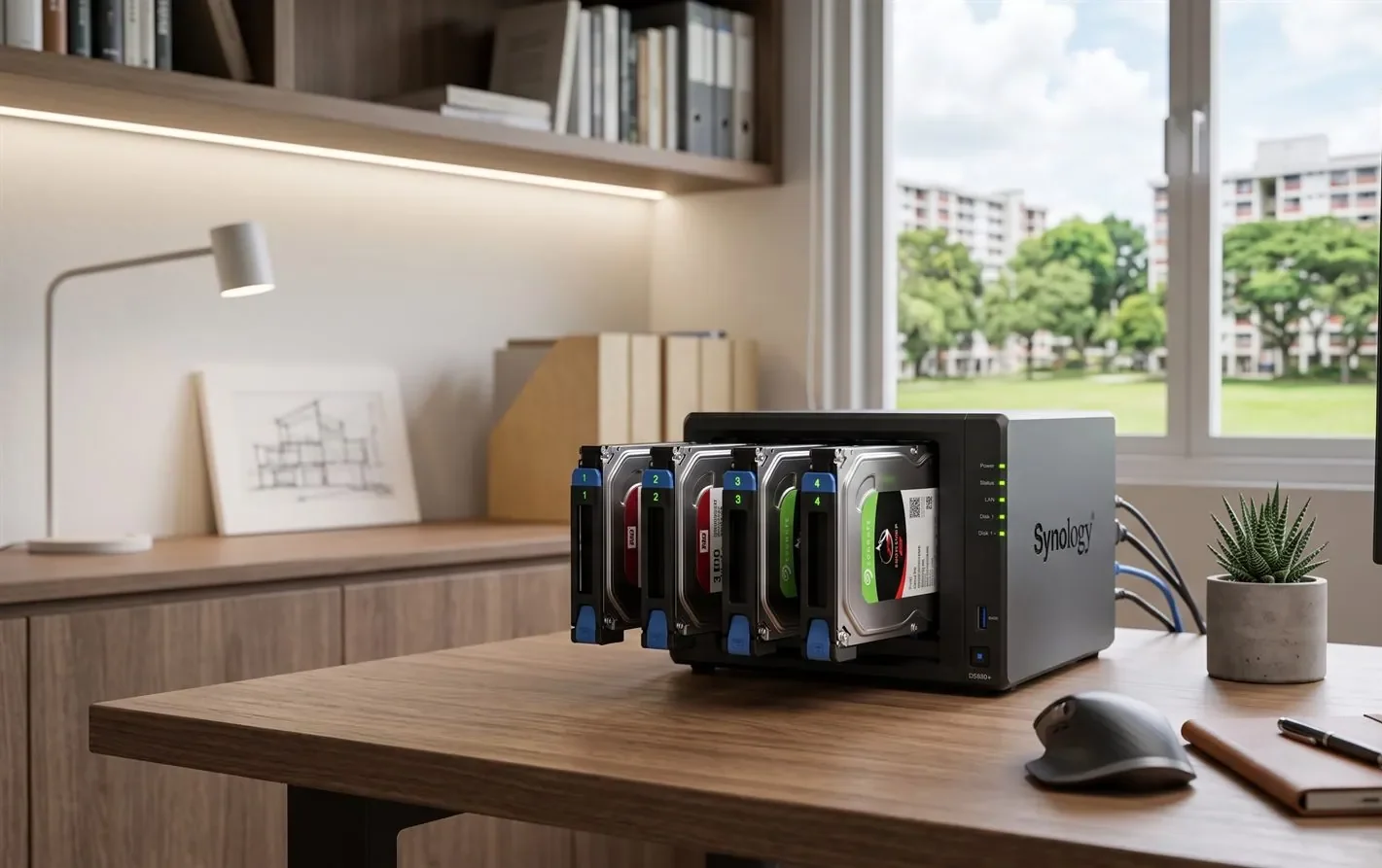
The 10 best NAS data recovery tools
1. R-Studio — best all-round for NAS and RAID. Powerful and widely used by professionals, R-Studio reconstructs RAID arrays, supports Linux/NAS file systems (ext, Btrfs, XFS), and can recover from disk images. Technical, but excellent for complex NAS cases in capable hands.
2. Linux mdadm + LVM (manual array reassembly) — best for advanced Synology and QNAP arrays. Synology and QNAP build their volumes on Linux software RAID with LVM on top, so a degraded array can often be assembled read-only on a Linux machine and the data copied off before any rebuild is attempted. Free, but it assumes you are comfortable on the command line.
3. ReclaiMe (with ReclaiMe Free RAID Recovery) — best for automatic RAID parameter detection. ReclaiMe is beginner-friendlier than most, and its free companion tool auto-detects RAID parameters (order, stripe size), which is often the hardest part of NAS recovery.
4. DiskInternals RAID Recovery — best guided RAID rebuild. A more approachable interface that walks you through reconstructing common RAID levels and reading the resulting volume, with previews before recovery.
5. Synology / QNAP built-in tools & snapshots — check these first. Before third-party software, check your NAS's own recovery features: snapshots (Btrfs snapshots on Synology, or QNAP snapshots) can restore deleted or changed files instantly, and both vendors offer recovery guidance for degraded volumes.
6. Stellar Data Recovery Technician — best commercial all-in-one. A polished commercial tool that handles RAID 0/5/6 reconstruction and recovery from NAS drives, with a friendlier experience than the deeply technical options.
7. TestDisk & PhotoRec — best free option. Free and open-source: TestDisk can repair partitions and PhotoRec recovers files by signature from NAS member disks or images. Not RAID-aware on their own, but valuable free tools in the right workflow.
8. Runtime GetDataBack / RAID Reconstructor — best for classic RAID rebuilds. Long-standing tools specifically for reconstructing RAID arrays and then recovering files, well regarded for standard RAID 5 setups.
9. DiskDrill — best for single-disk NAS or simple cases. Approachable and good for a single-drive NAS or a member disk, though less suited to complex multi-disk RAID reconstruction than the specialist tools.
10. Disk imaging tools (ddrescue) — the essential first step. Not recovery software as such, but critical: imaging each NAS disk with a tool like ddrescue before attempting anything means you work on copies, never the originals — the single best way to avoid making a bad situation worse.

The safe DIY workflow (if you attempt it)
If you're technical and the data isn't mission-critical, this is the only responsible order:
- Power down the NAS and label each drive with its bay number before removing them.
- Image every disk to separate storage with ddrescue — never work on the originals.
- Reconstruct the RAID virtually from the images using ReclaiMe or R-Studio, letting the tool detect parameters.
- Recover files to a different drive, then verify they open.
At no point should you resync, rebuild, or reformat the live array. If any disk is clicking or unreadable, stop — imaging a failing drive is itself a job for specialist equipment.
The honest limits of DIY NAS recovery
We'd rather be straight with you:
- Multiple failed disks (e.g. two dead drives in a RAID 5) put the data beyond what software alone can rebuild — it needs disk-level repair first.
- A clicking or unreadable member disk can't be imaged safely with normal tools; forcing it worsens the damage.
- Encrypted volumes (Synology/QNAP encryption) need the correct keys or passphrase — without them, the data can't be decrypted.
- One wrong write to the array — a rebuild, an initialise, a reformat — can overwrite the very data you're trying to save.
If a disk is clicking, more than one drive has failed, the volume is encrypted, or the data is business-critical, DIY is high-risk. Every failed attempt can make professional recovery harder. See our NAS data recovery and RAID data recovery services.
When a professional lab is the right call
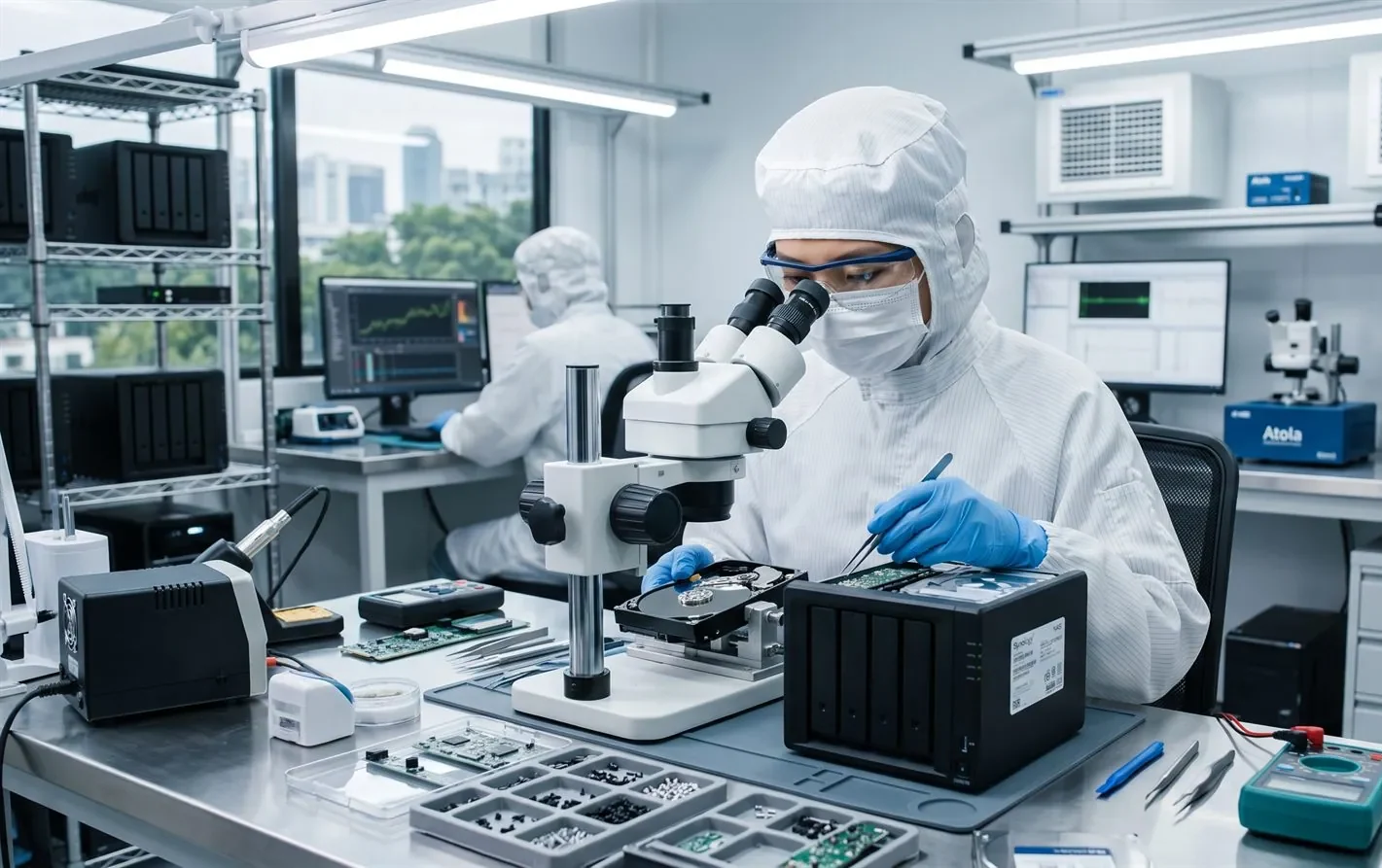
For a failed multi-disk array, a clicking NAS drive, an encrypted volume, or irreplaceable business data, a professional lab is the safer choice. Labs image failing disks with specialist hardware, reconstruct the array correctly, and handle the proprietary file systems — the exact skills DIY tools can't provide.
CBL's cleanroom lab recovers data from failed Synology, QNAP and custom NAS/RAID systems — free diagnosis, fixed quote before any work.
- WhatsApp: +65 8127 7508
- Call: +65 6588 0261
How to protect your NAS data in the first place
A NAS is a convenience, not a backup — and treating it as one is how people lose data despite having "redundancy." Protect yourself:
- RAID is not a backup. RAID protects against a single disk failing, but it does nothing against accidental deletion, ransomware, fire, theft, or a controller failure that takes down the whole unit. Every NAS still needs a separate backup.
- Follow the 3-2-1 rule. Keep another copy of critical data off the NAS — ideally offsite or in the cloud. See our data backup tactics.
- Enable snapshots. Synology (Btrfs) and QNAP snapshots let you roll back deleted or ransomware-encrypted files instantly, with minimal storage cost. Turn them on today.
- Monitor drive health. NAS units report SMART data per disk — enable email alerts so you learn about a failing drive before it takes down the array, and replace it on your schedule, not the array's.
- Use a UPS. A power cut mid-write can corrupt a NAS volume. A small UPS lets the NAS shut down cleanly.
- Replace drives proactively. Don't run disks until they die. In a multi-year-old array, ageing all at once is a real risk — stagger replacements before failures cascade.
Do these and a single disk failure becomes a routine swap rather than an emergency — and even a total NAS loss is just a restore from your separate backup.