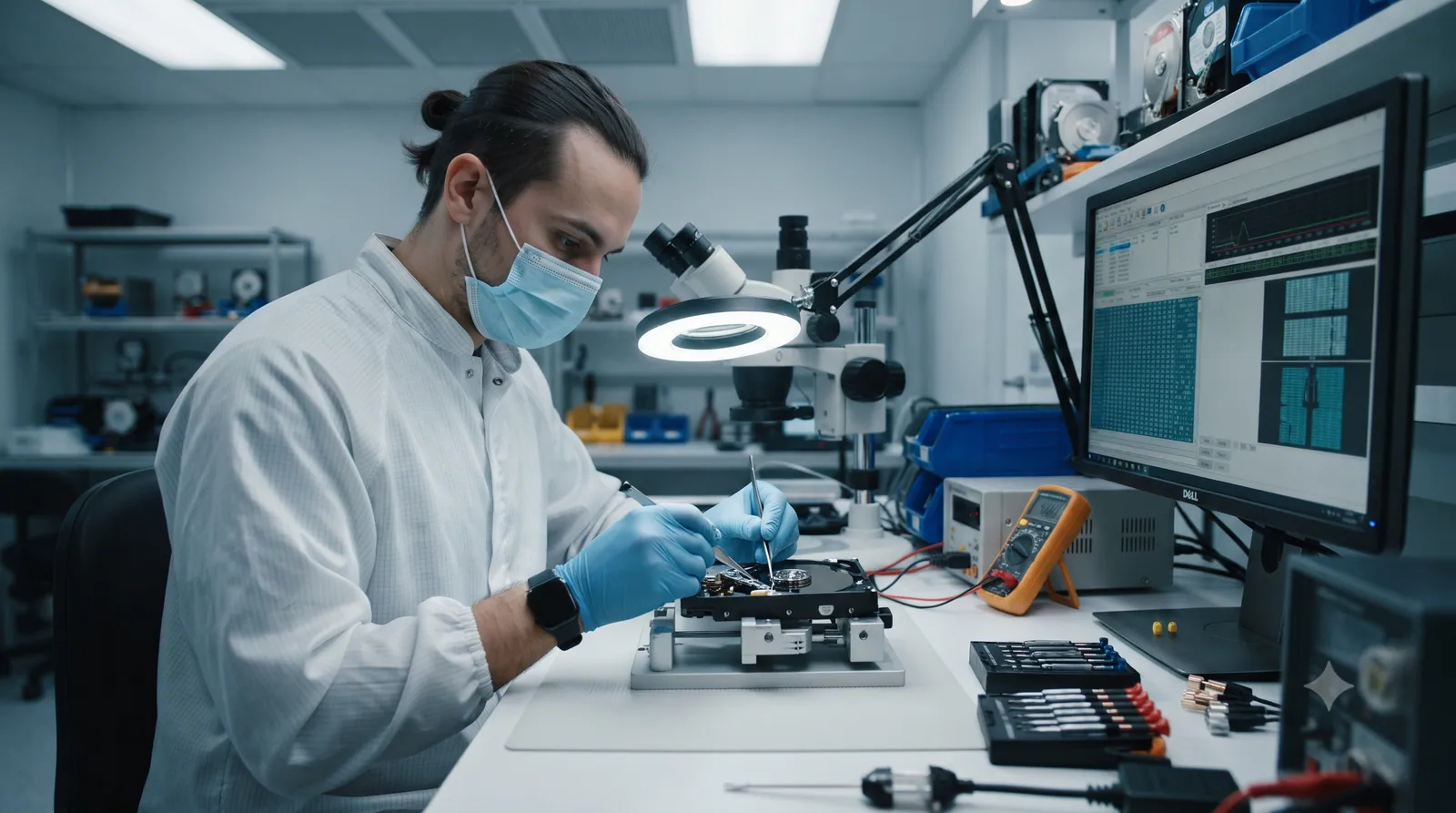
"Should I get an HDD or an SSD?" is one of the most common tech questions — and while SSDs get all the hype, the honest answer isn't always "just get an SSD." Each has real strengths, and the right choice depends on what you're storing and why. As a data recovery lab, we also see a side most comparisons ignore: what each means when things go wrong. This guide gives you an honest HDD vs SSD comparison for 2026 — speed, price, reliability, lifespan, and data recovery — so you can choose the right storage.
From the engineers at CBL Data Recovery Singapore, who recover data from both every day.
The quick answer
For most people's main drive — the one their operating system and everyday files live on — an SSD is the clear choice: it's dramatically faster, more shock-resistant, and makes a computer feel new. For bulk storage and archives — large media libraries, backups, data you keep but rarely touch — an HDD still wins on cost per terabyte. Many people are best served by both: an SSD for the system and active files, an HDD for mass storage and backups. Now the details behind that.
Speed
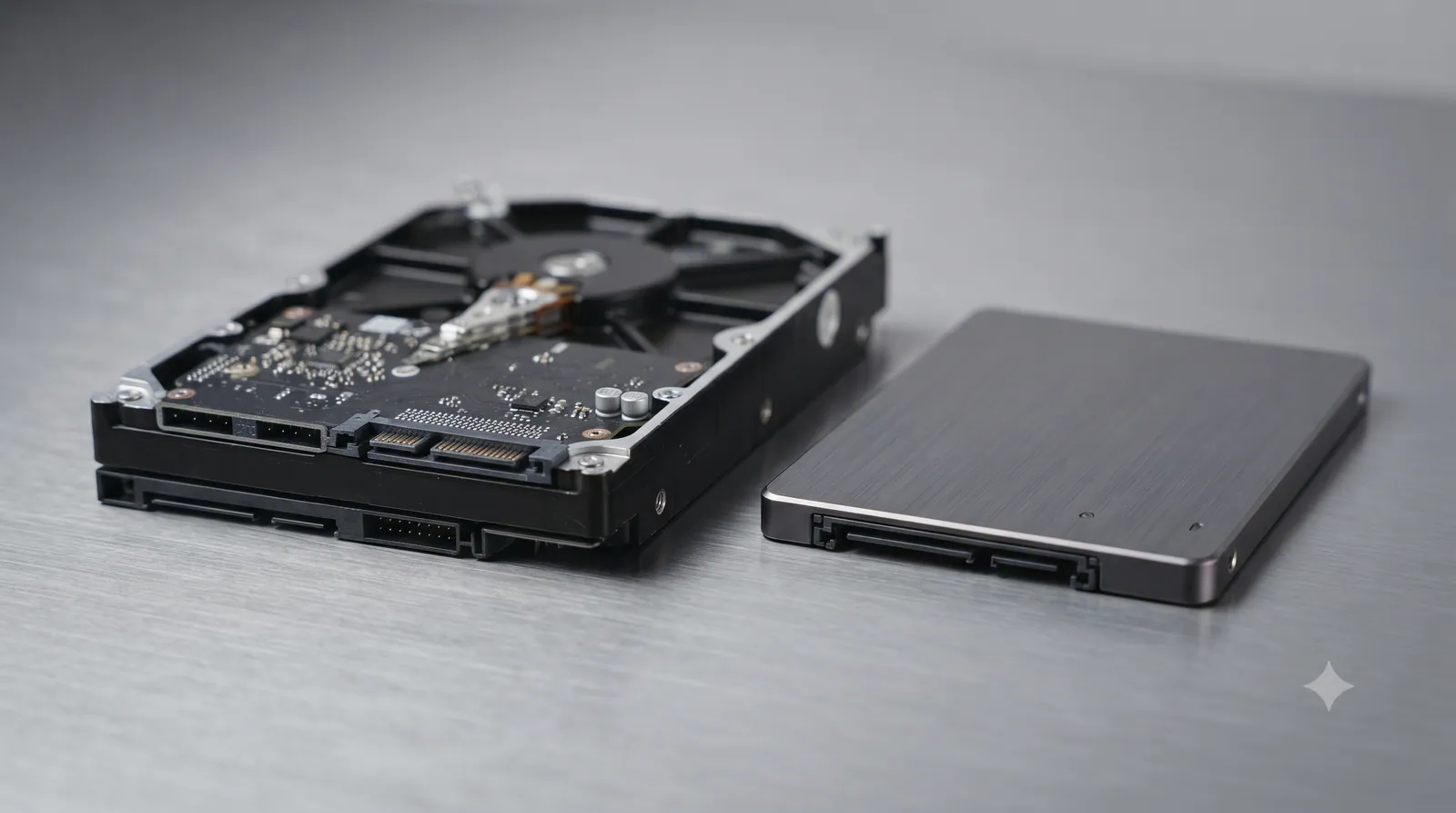
No contest — SSDs are far faster. With no moving parts, they access data almost instantly, boot systems in seconds, and load applications and files many times faster than a hard drive. HDDs, with spinning platters and moving heads, are limited by mechanical speed. If responsiveness matters — and for a system drive it always does — SSD wins decisively.
Price and capacity
HDDs win on cost per terabyte. Hard drives remain much cheaper for large capacities, which is why they dominate bulk storage, NAS units, and backup drives. SSD prices keep falling, but for storing many terabytes of media or archives affordably, HDDs are still the value choice. If you need lots of space on a budget, HDD; if you need speed and can pay more per terabyte, SSD.
Reliability and durability
This one's nuanced. SSDs are more shock-resistant — no moving parts means a drop that would crash an HDD's heads often leaves an SSD unharmed, making them ideal for laptops. But SSDs aren't invincible: their memory cells wear out with writes, and when SSDs fail they often fail suddenly and completely, with little warning. HDDs are vulnerable to shock and wear out mechanically, but they often fail more gradually, giving warning signs (noises, slowdowns, bad sectors) that let you back up in time. Neither is "more reliable" across the board — they fail differently.
Lifespan
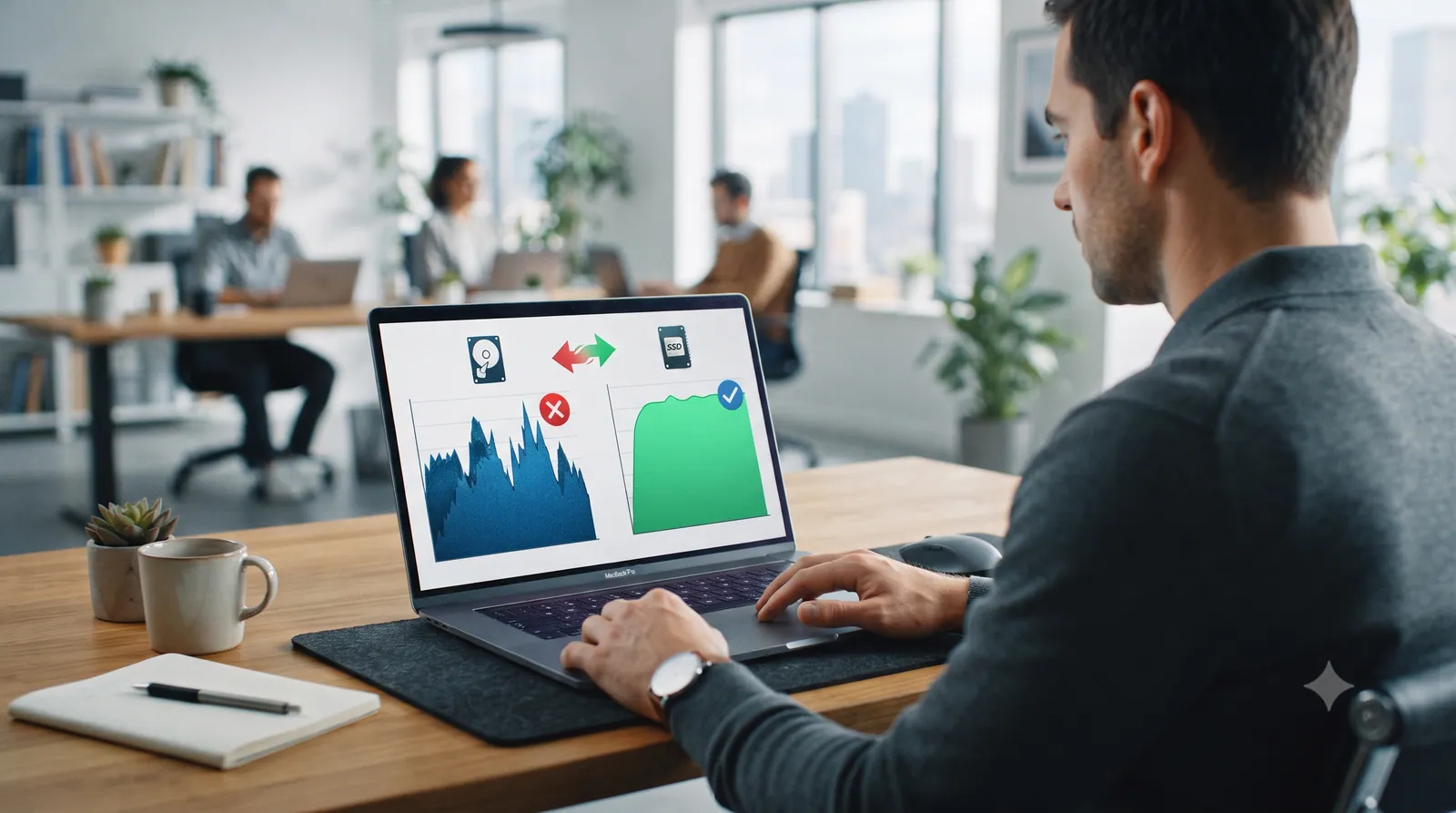
Both have finite lives. HDDs typically last 3–5 years of regular use, sometimes longer, limited by mechanical wear. SSDs are limited by total data written (endurance), which for everyday users often means a long life — but heavy write workloads wear them faster. For archival storage where data sits unpowered for years, HDDs have traditionally been preferred, as SSDs can slowly lose data if left unpowered for very long periods.
What each means for data recovery
Here's the angle most comparisons miss — and it matters. When an HDD fails, the data usually still exists on the platters, and cleanroom recovery has strong success rates, even from clicking or crashed drives. When an SSD fails, recovery is often harder: TRIM actively erases deleted data, encryption is common, and controller failures can make the data very difficult to reach. In short, a failed HDD is frequently recoverable; a failed SSD can be a tougher, less certain case. This isn't a reason to avoid SSDs — but it is a strong reason to back up SSDs diligently, because you can't count on recovery the way you sometimes can with HDDs.
Both HDDs and SSDs fail — differently, but inevitably. SSD failures in particular are often sudden and harder to recover. No drive choice replaces a backup. See our data backup tactics.
Which should you choose?
- Choose an SSD for your system/boot drive, laptops, and anything where speed and shock-resistance matter — which is most everyday computing.
- Choose an HDD for bulk storage, media libraries, backups, and NAS, where cost per terabyte and capacity matter most.
- Choose both — the ideal setup for many: SSD for speed, HDD for capacity and backups.
And whichever you pick, keep a backup — because the one certainty is that every drive, HDD or SSD, eventually fails.
CBL's ISO-certified lab recovers data from both hard drives and SSDs — free diagnosis, fixed quote before any work.
- WhatsApp: +65 8127 7508
- Call: +65 6588 0261