
Search for how to recover a deleted file and you'll be flooded with ads insisting you must download — and pay for — their recovery software. So it's a fair question: is it actually compulsory to use software to recover deleted files? The honest answer is often no. In many cases, free, built-in methods get your files back without installing anything, and there are situations where software can't help at all and only a lab will do. This guide explains, honestly, when you need recovery software in 2026, when you don't, and when to escalate.
From the engineers at CBL Data Recovery Singapore — who'd rather you use the free route when it works.
When you don't need software at all
For a large share of deleted-file situations, no third-party software is needed:
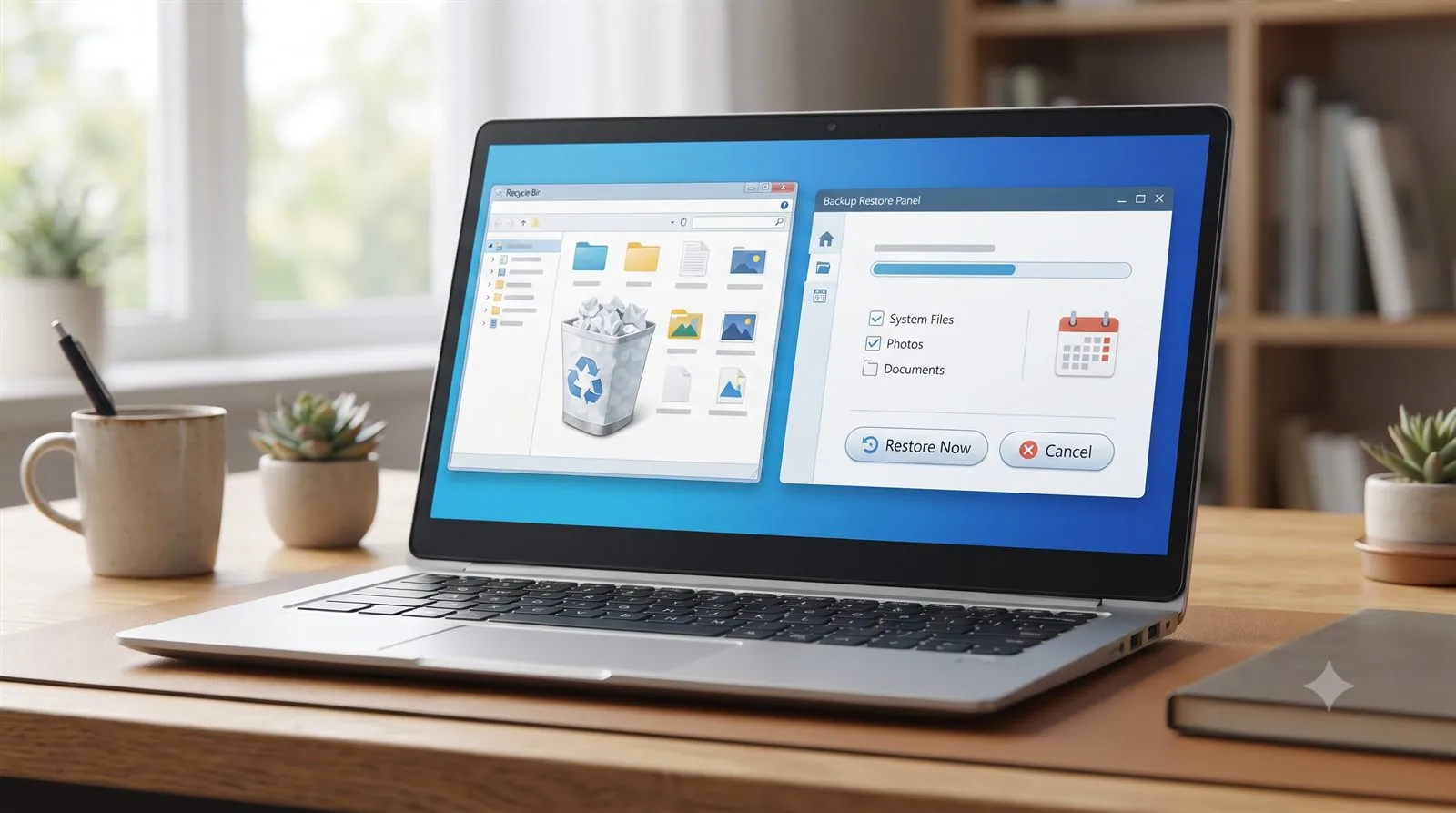
- The file is in the Recycle Bin or Trash. Just restore it — no software, no cost.
- You have File History, Time Machine, or a backup. Restore the file from your backup; it's faster and more reliable than any recovery tool.
- The file was in a synced cloud (OneDrive, Google Drive, iCloud, Dropbox). Check the service's trash and version history — cloud copies survive local deletion for weeks.
- You just deleted it. Press Undo (Ctrl-Z / Cmd-Z) immediately to reverse it.
- An app kept a version. Many apps have built-in version history to revert to an earlier copy.
If any of these apply, you're done — for free, without downloading anything. Always check these first.
When recovery software is the right tool
Software becomes genuinely useful when the free methods above don't apply:
- You emptied the Recycle Bin / Trash and have no backup.
- A drive, USB stick, or memory card was formatted or shows as RAW.
- Files were deleted from an external drive or card with no backup.
- No versioning or cloud copy exists.
In these cases, recovery software (Recuva, Disk Drill, PhotoRec, TestDisk) scans the storage for recoverable data. It's the right tool when the data is still on a healthy drive but there's no built-in way to get it back. The key rules: install it on a different drive, scan read-only, and recover to a separate location.
When software can't help — and a lab is needed
Here's what recovery software can't do, and where people waste money trying:
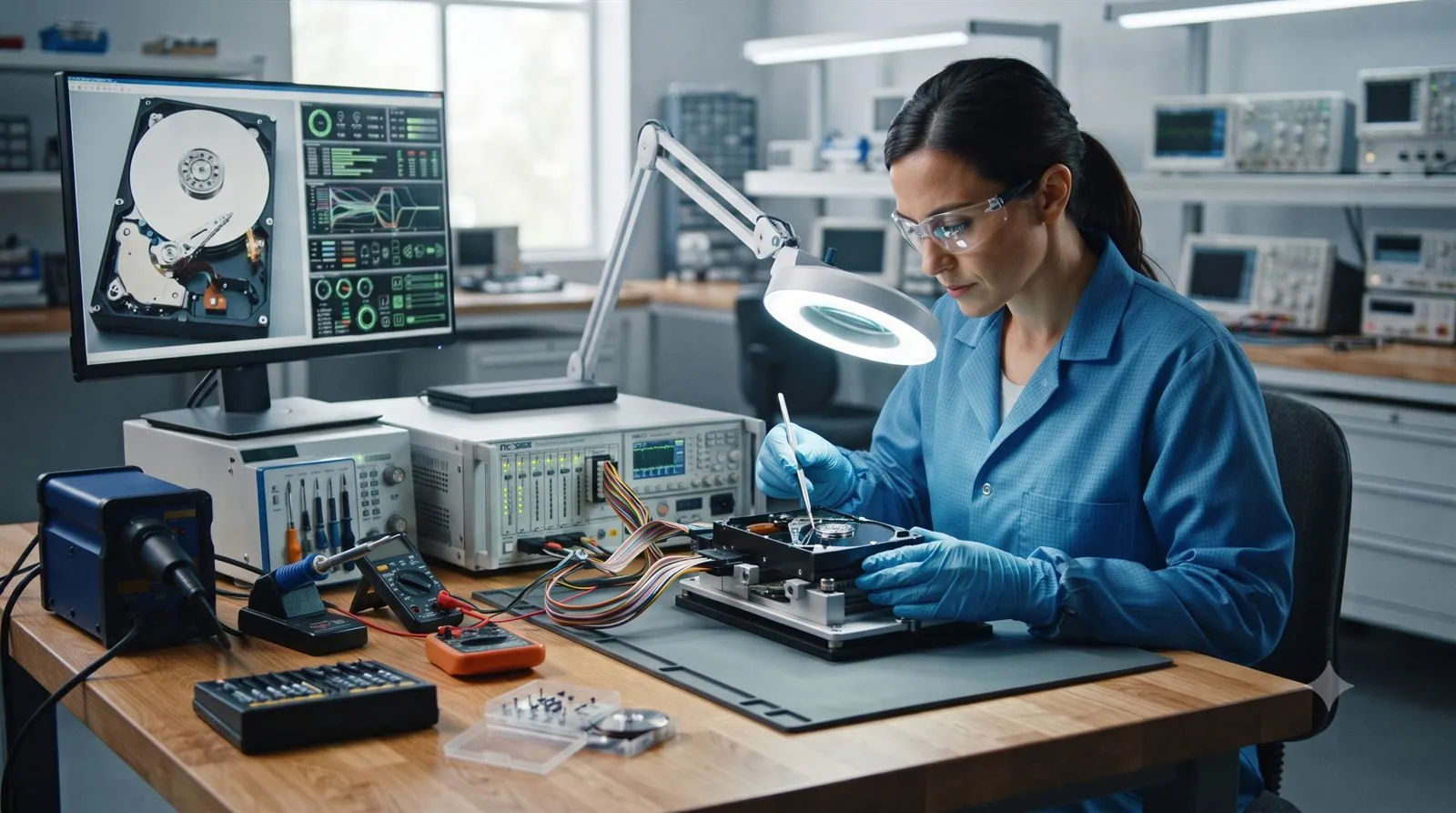
- Physical drive failure. If a drive is clicking, not detected, or damaged, software can't help and running it can worsen things. That's a lab job.
- Physically damaged cards, USB sticks, or phones. The data is on the chip, but reaching it needs chip-level lab recovery.
- Overwritten data. Once data is physically overwritten, no software or lab can rebuild it.
- Healthy modern phones/SSDs with no backup. Encryption and TRIM often erase deleted data, so software can't retrieve it.
Recognising these cases saves you from buying software that can't succeed — and from making a physically failing drive worse.

A simple decision guide
Ask these in order:
- Is it in the Trash/Recycle Bin, a backup, or the cloud? → Restore it for free. No software needed.
- Is the drive healthy but the file gone with no backup? → Recovery software is the right tool.
- Is the drive failing, damaged, or the data irreplaceable and software failing? → Stop and use a lab.
- Was the data physically overwritten? → Unfortunately, it's not recoverable by any means.
This sequence gets you to the right solution — free method, software, or lab — without wasting money or risking your data.
If your drive is clicking, not detected, or damaged, no consumer software will recover it — and running one can destroy recoverable data. Save your money and get a proper diagnosis. See our data recovery services.
When to call a lab
Call a lab when the drive or device is failing or physically damaged, when the data is irreplaceable and free methods and software have failed, or when the storage isn't detected. Labs do what no software can — repair failing hardware, image drives, and perform chip-level recovery. For everyday deletions on healthy storage, though, free methods or software usually suffice, which is why we always suggest trying those first.
CBL's ISO-certified lab recovers data that software can't — free diagnosis, fixed quote before any work.
- WhatsApp: +65 8127 7508
- Call: +65 6588 0261
The best "recovery tool" of all
Notice that the easiest recoveries — Trash, backups, cloud, version history — all rely on something you set up before the loss. That's the real lesson: a good backup makes most recovery free and instant, no software required. If you take one thing from this guide, make it this — set up automatic backups, and you'll rarely need recovery software or a lab at all. See our data backup tactics.