
USB thumb drives are the most convenient storage ever made — and the most failure-prone. They ride around on keychains, get bent in pockets, yanked out mid-copy, and trusted with the only copy of important files. When one dies, the panic is real: an entire presentation, a folder of photos, or a client's documents, suddenly unreadable.
This guide from the engineers at CBL Data Recovery Singapore breaks down the 8 most common causes of thumb drive failure and data loss in 2026, how to prevent each, and — when prevention comes too late — how the data can be recovered.
Why flash drives fail so often
Unlike a hard drive tucked safely inside a computer, a thumb drive is exposed to the world. It's tiny, cheaply made, physically abused, and built around flash memory that wears out with use. Add a fragile connector and a single point of failure — one small controller chip — and you have a device that's brilliant for convenience but poor for long-term safety. A thumb drive should never hold your only copy of anything.

The 8 most common causes of thumb drive failure
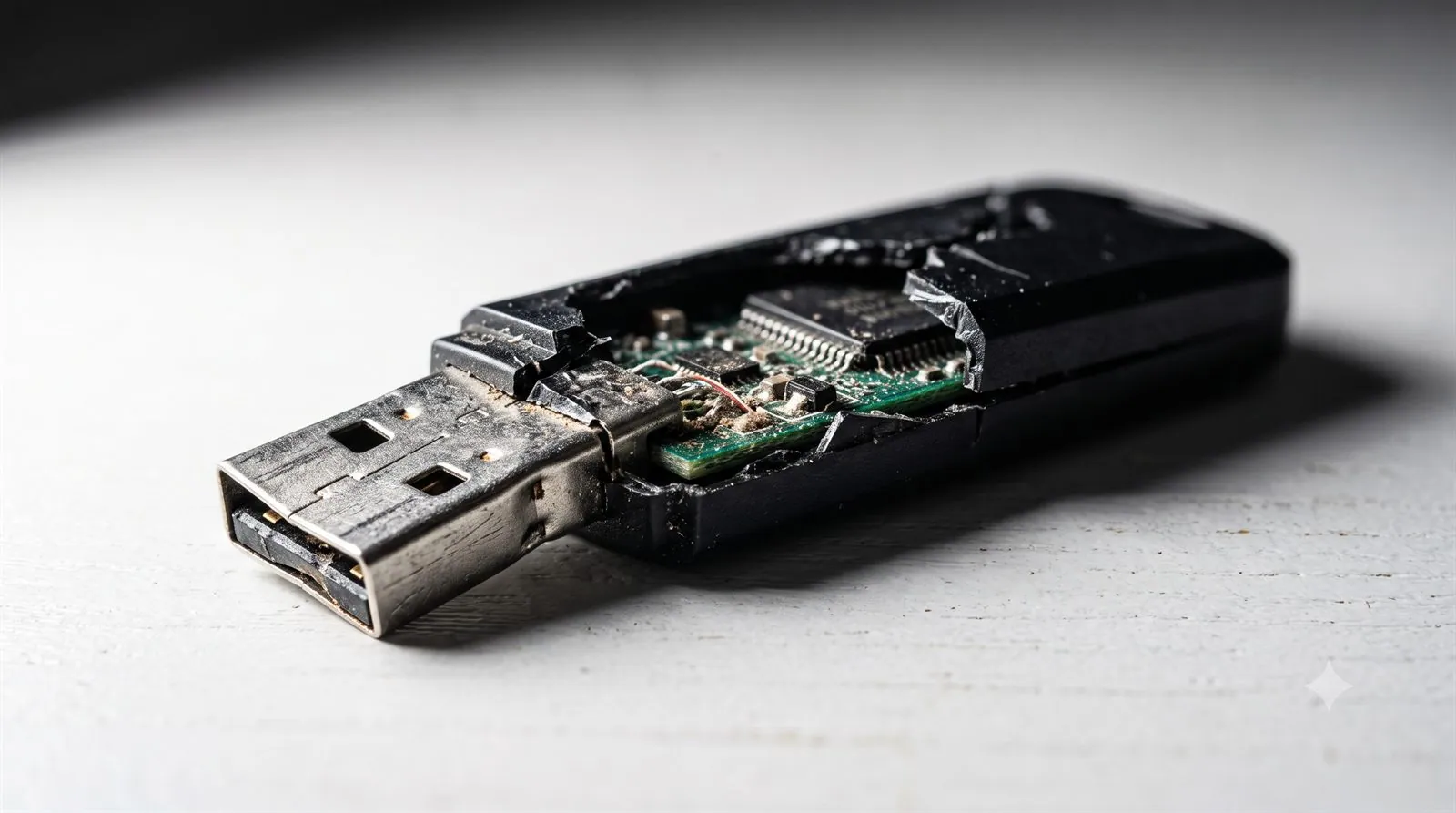
1. Physical damage to the connector. The USB connector is the weakest point. Left plugged in and knocked, or carried loose in a bag, the metal connector bends, cracks the solder joints, or snaps off entirely. The memory inside is often fine — the drive just can't make contact. Prevent it: use a cap or retractable design, and never leave a drive sticking out where it can be hit.
2. Unsafe removal. Pulling a drive out while it's still writing corrupts the file system and can leave files half-written. This is the single most common cause of "the drive is asking to be formatted" errors. Prevent it: always use "Safely Remove Hardware" (Windows) or eject (Mac), and wait for the activity light to stop.
3. Flash memory wear-out. Flash cells can only be written a limited number of times. A drive used constantly — as a running disk, for torrents, or for frequent large transfers — wears out its memory and starts losing data silently. Prevent it: use thumb drives for transfer and light storage, not as a working drive.
4. File-system corruption. Interrupted transfers, sudden power loss, or removing the drive at the wrong moment can corrupt the file system, making the drive show as "RAW," empty, or unreadable while the data is still physically present. Prevent it: finish transfers before removing, and keep the drive malware-free.
5. Controller chip failure. Every flash drive has a tiny controller that manages the memory. If it fails — from heat, a power spike, or a defect — the drive becomes completely unrecognised, even though the memory chips still hold your data. This is a common and serious failure. Prevent it: avoid cheap no-name drives and protect from heat and static.
6. Water and liquid damage. Thumb drives go through the wash in pockets, fall in drinks, and get caught in the rain. Liquid causes corrosion and short circuits on the tiny board. Prevent it: if it gets wet, do not plug it in — let it dry completely and, if the data matters, have it assessed before powering it.
7. Electrical damage. Power surges, static discharge, or a faulty USB port can fry a drive's circuitry instantly. Prevent it: avoid plugging drives into damaged or ungrounded ports, and be mindful of static in dry environments.
8. Counterfeit and defective drives. Fake "high-capacity" drives sold cheaply online are rampant — a drive labelled 1TB may really hold 16GB, silently corrupting data once you exceed the real capacity. Manufacturing defects also cause early failure. Prevent it: buy from reputable brands and sellers, and test a new drive's real capacity before trusting it.
Warning signs your thumb drive is failing
Catch these early and you can rescue your files before total failure:
- The drive isn't recognised, or appears and disappears.
- Windows asks you to format the drive before you can use it.
- Files are corrupted, missing, or won't open.
- Transfers are extremely slow or fail partway.
- The drive shows the wrong capacity or reads as "RAW."
If your thumb drive is failing, do not format it, do not run "repair" tools that write to it, and do not keep re-plugging it repeatedly. Each attempt can overwrite recoverable data or finish off a dying controller. If the files matter, stop and get it assessed. See our USB flash drive recovery service.
How thumb drive data recovery works
When a drive won't mount, the data is usually still sitting on the memory chips — the problem is reaching it. Depending on the fault, a lab will:
- Repair the connector or board with micro-soldering, if the failure is physical, so the drive can be read normally.
- Replace or bypass a failed controller, or in severe cases read the raw memory chips directly and rebuild the data using knowledge of how that controller organised it (a specialised process called chip-off with translation).
- Rebuild a corrupted file system to extract intact files when the memory is healthy but the structure is damaged.
The key point: a dead thumb drive is frequently recoverable — but only if it hasn't been overwritten by formatting or clumsy DIY repairs first.
CBL's ISO-certified lab recovers data from snapped, water-damaged and unrecognised flash drives every week — free diagnosis, fixed quote before any work.
- WhatsApp: +65 8127 7508
- Call: +65 6588 0261

Best practices to protect your data on a thumb drive
You can't make a flash drive immortal, but a few habits dramatically cut your risk of losing data on one:
- Never store the only copy. Treat a thumb drive as a courier, not a vault. Anything important should also live on your computer, a cloud service, or a proper backup drive. If the thumb drive holds the sole copy, you're one bad connector away from losing it.
- Eject before you pull. Make safe removal a reflex. It costs two seconds and prevents the most common cause of corruption.
- Buy quality, buy real. Stick to reputable brands from trusted sellers, and test a new drive's true capacity before relying on it. The "too good to be true" 2TB drive for a few dollars almost always is.
- Keep it physically safe. A cap or retractable connector, a spot in a case rather than loose in a bag, and keeping it away from water, heat and magnets all extend its life.
- Don't use it as a working disk. Running software, editing large files, or constant read-write cycles directly on a thumb drive wears the flash out fast. Copy files to your computer to work on them, then back to the drive.
- Act fast on warning signs. The moment a drive behaves oddly, copy everything off it immediately and retire it. Flash drives rarely recover on their own — early symptoms usually precede total failure.
Follow these and a thumb drive becomes what it's meant to be: a handy way to move files, backed by real copies elsewhere, so a failure is an inconvenience rather than a disaster.