RAID is designed to keep data safe by spreading it across multiple disks with redundancy — so it surprises people when a RAID server fails, sometimes losing everything. But RAID failure is rarely a mystery, and it's often preventable. Understanding the common causes helps you avoid them, and knowing the right response when an array does crash can be the difference between a smooth recovery and permanent data loss. This guide covers the most common reasons for RAID server failure in 2026, how to prevent each, and the critical dos and don'ts.
From the engineers at CBL Data Recovery Singapore, who recover failed RAID arrays and servers every week.
First: RAID is not a backup
The single most important thing to understand is that RAID is redundancy, not backup. RAID protects against a disk failing — but it does nothing against accidental deletion, ransomware, controller failure, fire, theft, or the array itself crashing. Many businesses treat their RAID server as their backup and are devastated to learn otherwise when the array fails. A RAID server still needs a separate, independent backup. With that foundation set, here are the common ways RAID servers fail.
The most common causes of RAID server failure
1. Multiple / cascading disk failures. RAID 5 tolerates one disk failure; RAID 6, two. The classic disaster is a second disk failing during a rebuild, when the surviving disks are under heavy stress. Because drives in an array are often the same age and model, they tend to fail around the same time — turning a survivable single failure into total loss. Prevention: replace a failed disk immediately, monitor for early warnings, and consider mixing drive batches.
2. RAID controller failure. The controller manages the array. If it fails, the array won't come online even though every disk is healthy. A replacement controller must match closely, or the configuration can be lost. Prevention: keep controller firmware updated, note your exact controller model and config, and keep a compatible spare for critical systems.
3. Failed or interrupted rebuild. Rebuilding an array after a disk swap is stressful for the drives and can fail — from a second disk dying, a power event, or an error — leaving the array corrupted. Prevention: ensure the server is on a UPS during rebuilds, and don't rebuild onto a suspect disk.
4. Power problems. Surges and outages during writes can corrupt the array or damage the controller and disks. Servers are especially vulnerable because they're always writing. Prevention: always run servers on a UPS with clean power, and ensure graceful shutdown.
5. Human error and misconfiguration. Accidentally reinitialising the array, rebuilding in the wrong order, replacing the wrong disk, or a botched configuration change can wipe or corrupt the array. This is one of the most common — and most preventable — causes. Prevention: document the array configuration, label drive bays, and change nothing under pressure without a plan.
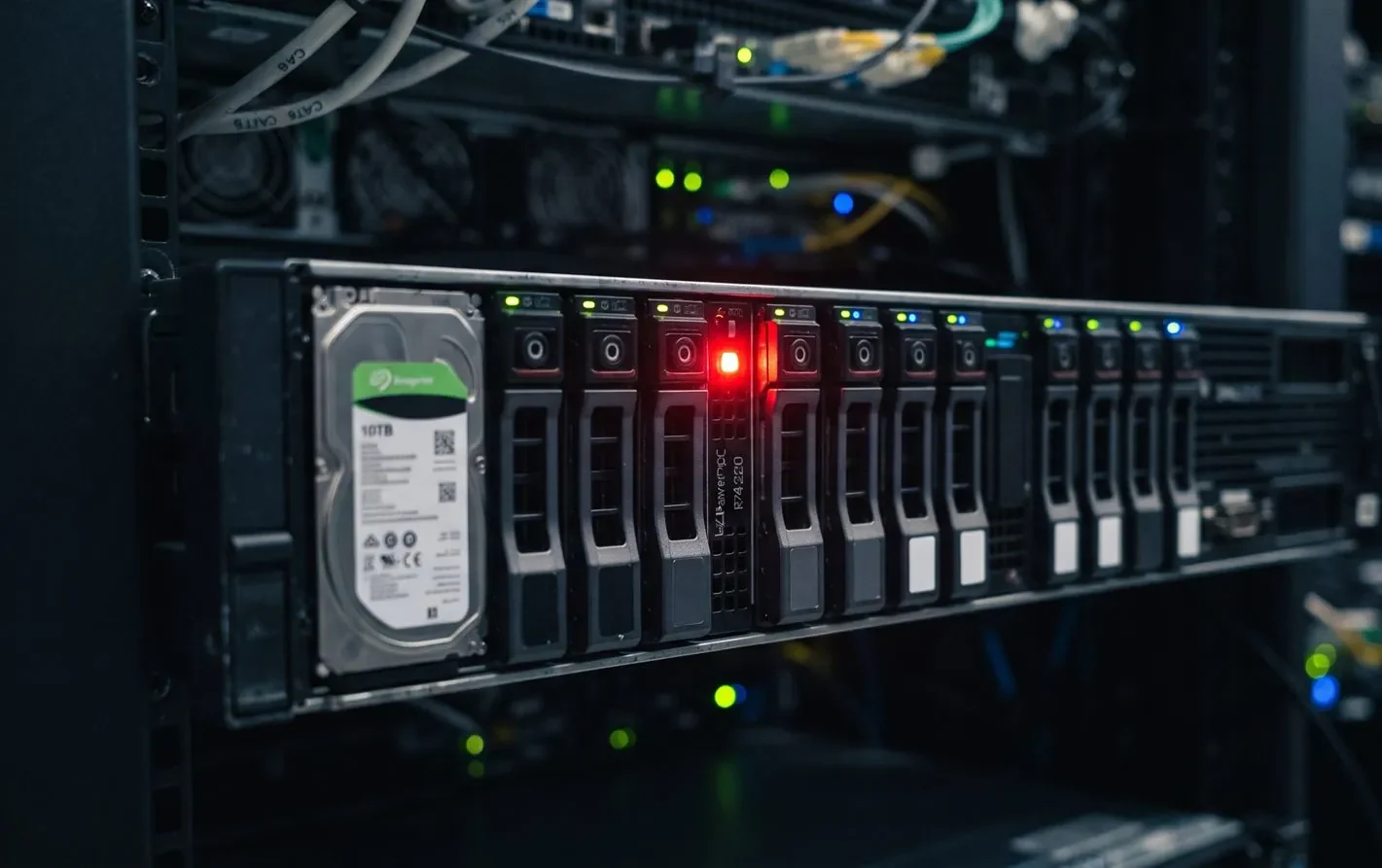
6. Degraded array left unaddressed. An array running "degraded" after a disk failure is one failure away from total loss — yet many run for weeks like this because no one noticed. Prevention: enable alerts so a failed disk is replaced immediately, not weeks later.
7. File-system or logical corruption. Even a healthy array can suffer file-system corruption from a crash, malware, or interrupted write, making data inaccessible. Prevention: keep systems patched, protected against malware, and backed up.
The critical dos and don'ts when RAID fails
When a RAID array crashes, your response determines whether the data survives:
- Don't force a rebuild onto a suspect array or disk — a failed rebuild can corrupt the data beyond recovery.
- Don't reinitialise or reconfigure the array — this can wipe the RAID metadata that recovery depends on.
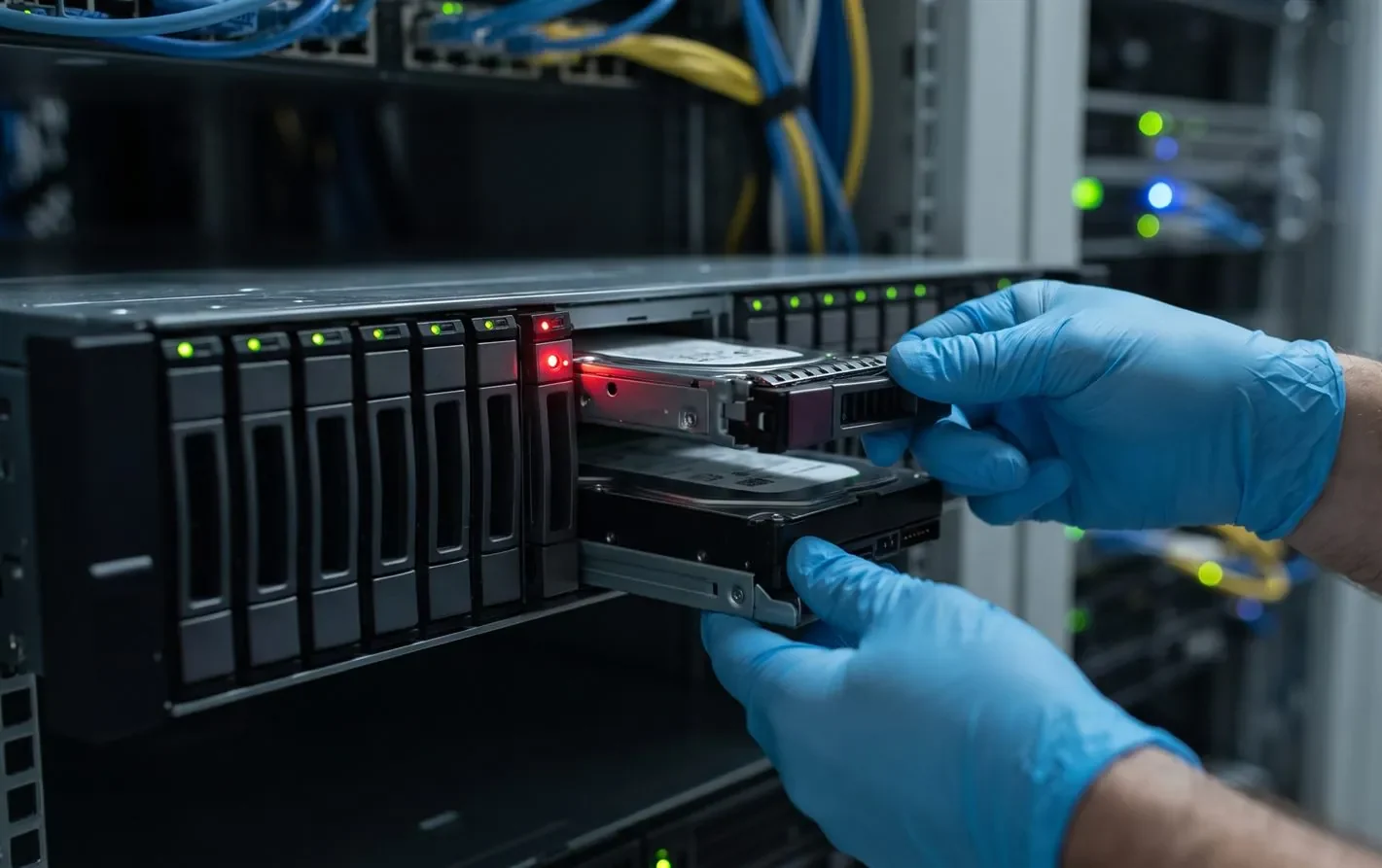
- Don't swap disks around or change their order — label each drive with its bay before removing anything.
- Do power down and stop using the array to prevent further damage.
- Do document everything — the controller model, RAID level, disk order, and what happened.
- Do consult a specialist before attempting recovery on business-critical data.
The most common way we see business RAID data destroyed is a forced or repeated rebuild on a degraded array. If your array has failed, power down and get it assessed before doing anything. See our RAID data recovery and server data recovery services.
How RAID recovery works
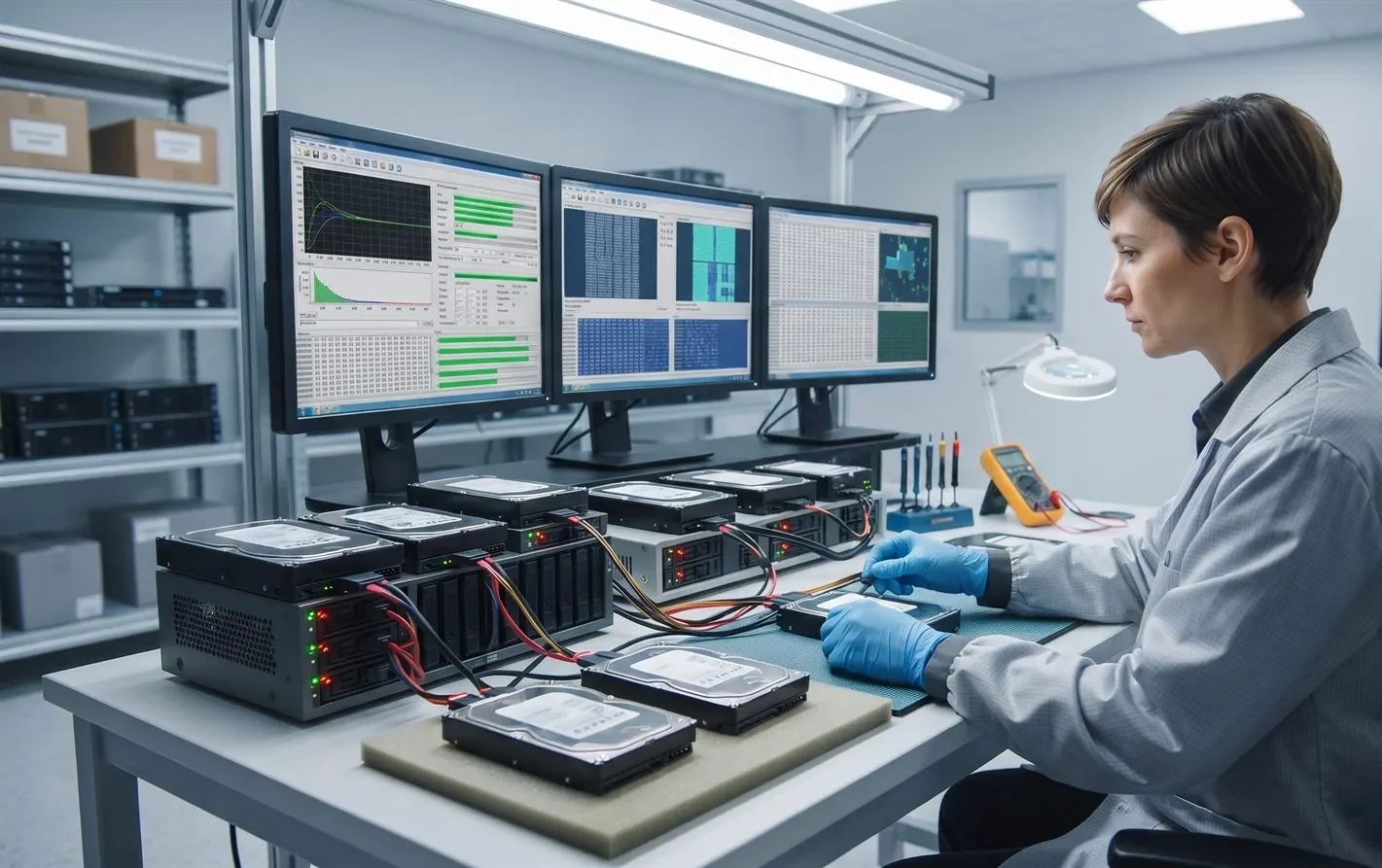
Proper RAID recovery doesn't touch the live array. Instead, a lab images every disk individually, then virtually reconstructs the array — determining the correct disk order, stripe size and parity from the images — and reads the file system to extract the data. Working on images means the fragile originals are never stressed, and multiple reconstruction attempts can be made safely. This is precisely why forcing a live rebuild is so dangerous, and why RAID recovery is specialist work.
CBL's cleanroom lab recovers data from failed RAID arrays and servers — free diagnosis, fixed quote before any work.
- WhatsApp: +65 8127 7508
- Call: +65 6588 0261