
In a world of instant cloud storage and fast SSDs, tape backup sounds like a relic. Yet ask any serious IT or data-protection professional and you'll hear the opposite: tape is not only still relevant in 2026, it has quietly become one of the most important defences against ransomware and a cornerstone of long-term data protection. Far from being obsolete, modern tape (LTO) technology is thriving precisely because of qualities no other medium matches. This guide explains why tape backup remains vital for data protection in 2026, and where it fits in a modern strategy.
From the engineers at CBL Data Recovery Singapore, who recover data from all media — including tape.
What tape backup is today
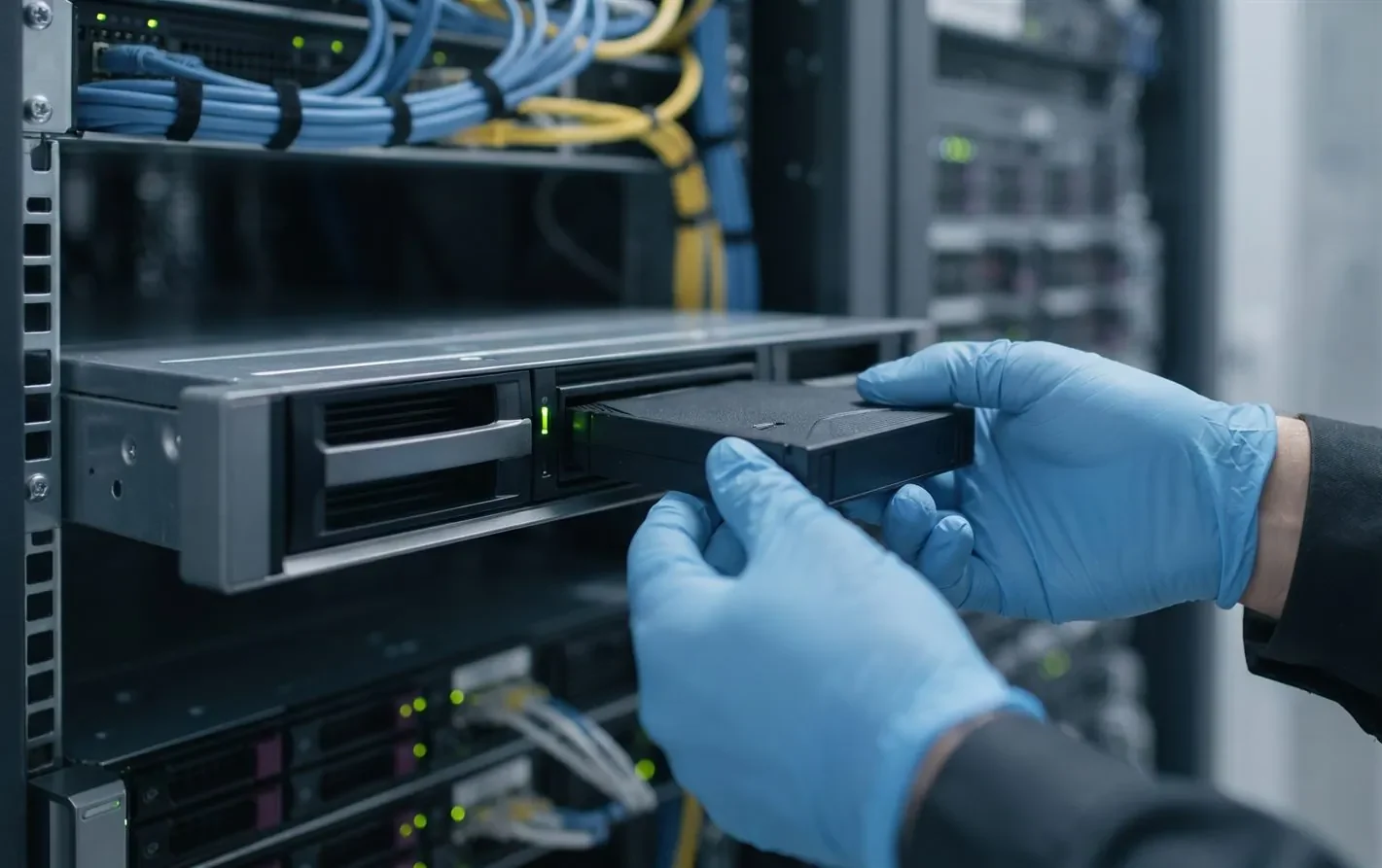
Modern tape backup uses LTO (Linear Tape-Open) technology, which has advanced dramatically — current generations store many terabytes per cartridge, with high transfer speeds and decades of shelf life. Businesses use tape libraries and standalone drives to back up servers, archives, and huge datasets. It's not the noisy, tiny-capacity tape of decades past; it's a high-capacity, cost-effective medium purpose-built for backup and archiving at scale.

Why tape matters more than ever
1. It's naturally air-gapped — the ultimate ransomware defence. This is tape's killer advantage in 2026. A tape that's been written and removed from the drive is physically disconnected from any network. Ransomware simply cannot reach it, encrypt it, or delete it. When online and even cloud backups can be compromised by a network-borne attack, an offline tape is a guaranteed clean copy. This is why organisations that thought tape was dead have brought it back specifically to survive ransomware.
2. It's extremely cost-effective at scale. For large volumes of data — especially archives and data you rarely access — tape's cost per terabyte is far lower than disk or cloud, and there are no ongoing cloud fees. For petabyte-scale backup and long-term retention, tape is often the most economical option by a wide margin.
3. It lasts for decades. LTO tapes have a shelf life measured in decades when stored properly, making them ideal for long-term archiving and compliance retention — keeping data safe for years without power or maintenance.
4. It's reliable and durable. Tape has a very low error rate and, being offline, isn't subject to the constant wear, power events, and online threats that affect disks. Stored correctly, it's a stable, low-risk medium.
Where tape fits in a modern strategy
Tape isn't a replacement for disk or cloud — it's the crucial offline layer in a layered strategy. The modern best practice is often expressed as 3-2-1-1-0: three copies, on two media types, with one offsite, one offline (tape), and zero errors (verified). In practice:
- Fast local backup (disk/NAS) for quick day-to-day restores.
- Cloud backup for offsite protection and convenience.
- Tape backup for the air-gapped, ransomware-proof, long-term copy.
Tape's role is the copy that survives when everything else is compromised — the last line of defence and the long-term archive. For businesses especially, it's the difference between paying a ransom and simply restoring from a tape the attackers could never touch.
The other side: recovering data from tape
Tape is highly reliable, but like any medium it can fail — cartridges get damaged, drives malfunction, tapes are overwritten by mistake, or old tapes become unreadable on current hardware. When critical data is trapped on a failed or damaged tape, specialist recovery is possible: labs repair damaged cartridges, read tapes on the correct hardware, and recover data from tapes that standard drives can't read. So even tape's rare failures are usually recoverable.
If a tape is damaged, unreadable, or was overwritten, don't assume the data is gone or throw it away — specialist tape recovery can often retrieve it. Handle damaged cartridges carefully and get them assessed. See our server data recovery service.
When to call a lab
Call a lab when a tape is damaged or unreadable, when a tape drive has failed with data on the cartridge, when tapes were accidentally overwritten, or when old tapes can't be read on current hardware. Labs have the equipment and expertise to recover data from tape that standard drives can't — preserving data that businesses depend on for compliance and continuity.
CBL's cleanroom lab recovers data from LTO and other tape formats — free diagnosis, fixed quote before any work.
- WhatsApp: +65 8127 7508
- Call: +65 6588 0261

Tape backup best practices
- Rotate tapes and store copies offsite for disaster resilience.
- Keep at least one recent tape offline and disconnected — that's the ransomware-proof copy.
- Store tapes properly — controlled temperature and humidity extend their long life.
- Verify your backups and test restores periodically — an unverified backup is just a hope.
- Combine tape with disk and cloud for a complete layered strategy. See our data backup tactics.