
If you've lost files and started searching for recovery software, two names come up again and again: Stellar Data Recovery and Disk Drill. Both are polished, popular, and capable — but they're not identical, and the right choice depends on your situation, platform and budget. This honest head-to-head compares them across the things that actually matter in 2026, and, just as importantly, explains the limits they both share so you know when neither app is the answer.
From the engineers at CBL Data Recovery Singapore — who use professional tools daily and have no stake in either app.
The two contenders at a glance
Stellar Data Recovery is a long-established recovery suite available on Windows and Mac, known for a wide range of editions (from basic file recovery up to a Technician tier that handles RAID and creates disk images) and strong support for many file types and scenarios, including formatted and unbootable drives.
Disk Drill, from CleverFiles, is famous for its clean, beginner-friendly interface on both Mac and Windows. It offers powerful scanning, a generous free-preview experience, and handy extra tools like a byte-to-byte backup feature and drive-health monitoring.
Both scan internal and external drives, USB sticks and memory cards, preview recoverable files, and recover a broad range of formats. The differences are in the details.
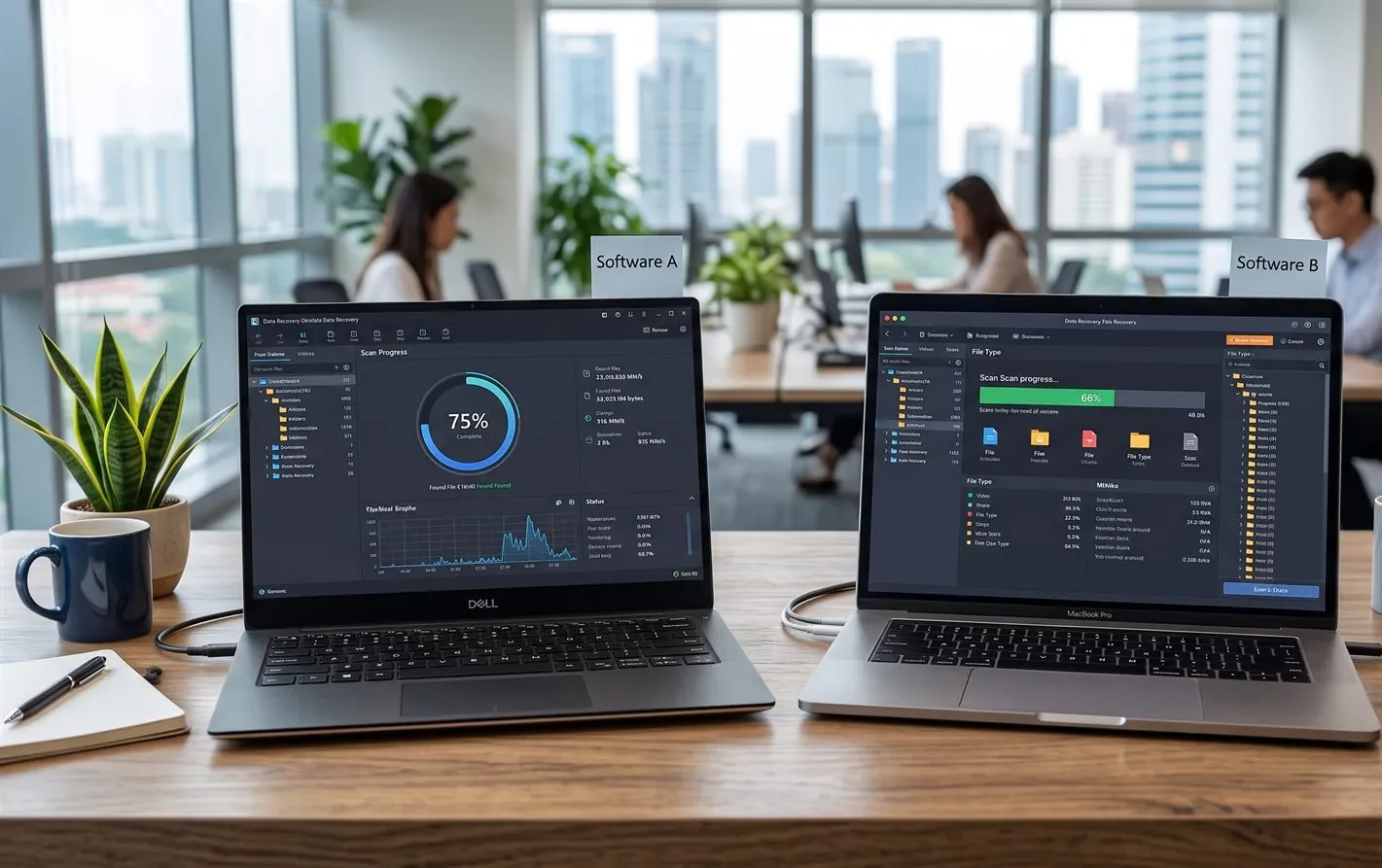
Head-to-head comparison
Ease of use. Disk Drill wins here for most people. Its interface is simple, modern and hard to get wrong — ideal for a first-time user in a panic. Stellar is also user-friendly but presents more options, which power users appreciate and beginners can find busier.
File types and scenarios. Both cover the common formats well. Stellar's higher editions edge ahead for tougher scenarios — RAID reconstruction, unbootable-system recovery, and disk imaging — making it more capable for complex or professional cases. Disk Drill covers everyday deletion, formatting and card recovery comfortably.
Scan quality and results. In practice both find similar results for straightforward cases, since deep-scan (signature-based) recovery relies on similar underlying techniques. For a simple deleted-file or formatted-card job, you'll often get comparable outcomes; for complex cases, Stellar's advanced editions have the edge.
Platforms. Both support Windows and Mac. Disk Drill is often praised for its Mac experience specifically, while Stellar offers a very broad set of Windows editions.
Free version. Both let you scan and preview for free so you can see what's recoverable before paying. Disk Drill's free tier on Windows historically included a small amount of free recovery; Stellar's free tier focuses on preview with a recovery cap. Either way, you can confirm your files are findable before spending.
Extra tools. Disk Drill bundles useful extras — a byte-level backup ("save a failing drive to an image first"), drive-health (SMART) monitoring, and duplicate finders. Stellar includes drive monitoring and, at higher tiers, imaging and RAID tools aimed at serious recovery.
Price. Both use a tiered model. Disk Drill often appeals with a one-time purchase option; Stellar's pricing scales with edition, so you pay more for the advanced RAID/imaging capabilities. Compare the specific edition you need rather than the headline price.
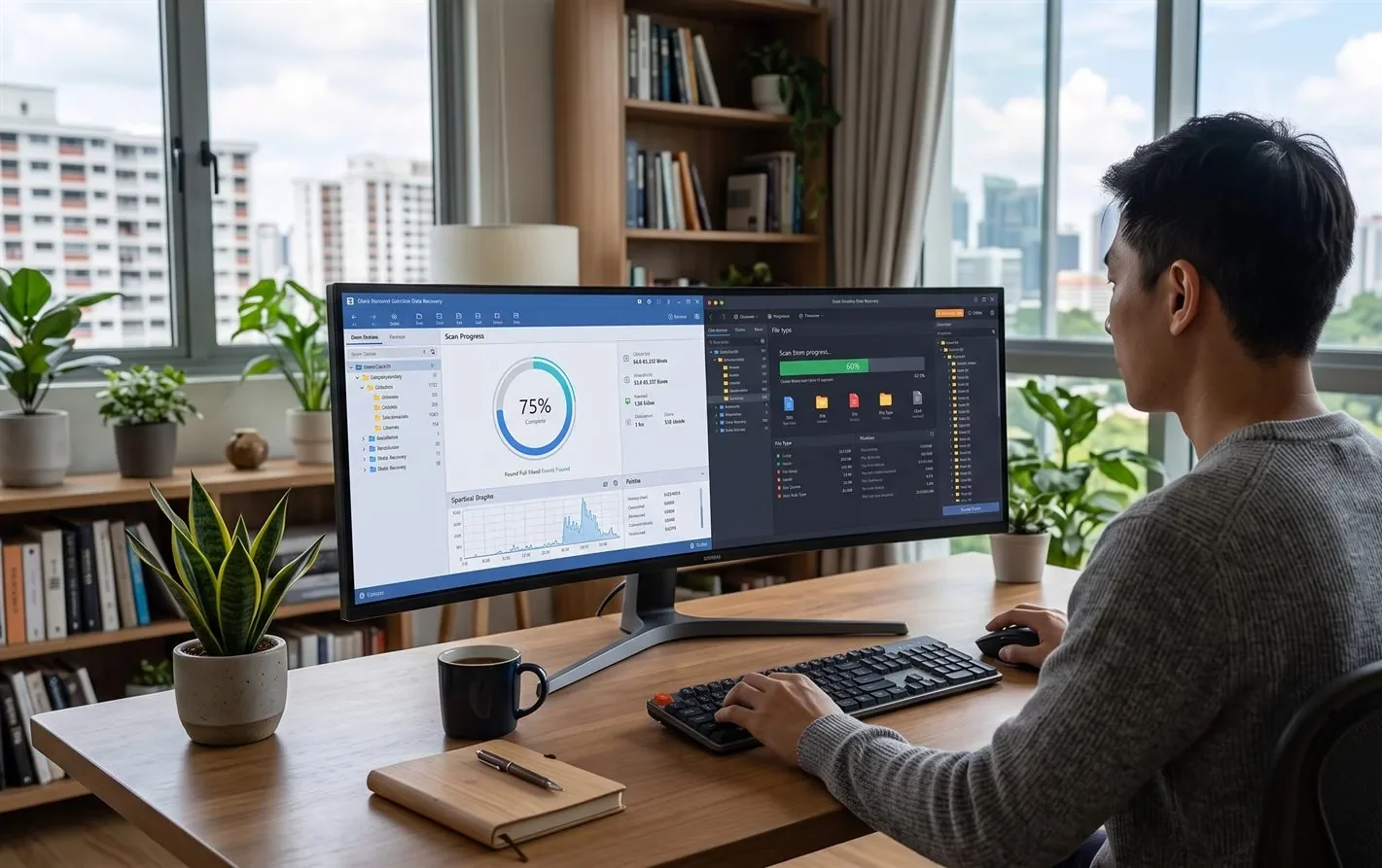
Quick comparison
| Factor | Disk Drill | Stellar Data Recovery |
|---|---|---|
| Ease of use | Excellent (beginner-friendly) | Good (more options) |
| Complex cases (RAID, imaging) | Basic | Strong (higher editions) |
| Free preview | Yes (+ some free recovery on Windows) | Yes (preview, capped recovery) |
| Extra tools | Backup, SMART, duplicates | SMART, imaging, RAID (higher tiers) |
| Pricing | One-time option available | Tiered by edition |
Which should you choose?
- Choose Disk Drill if you want the simplest possible experience for a common case — a deleted file, an emptied Trash, or a memory card — especially on a Mac, and you value a clean interface and a one-time purchase.
- Choose Stellar if you have a more demanding case — a formatted or unbootable drive, or RAID — and want the advanced editions' imaging and reconstruction features, or you're on Windows and want the breadth of editions.
Honestly, for a straightforward recovery, either will serve you well — try the free scan of one, and if it finds your files, that's your answer.
When to skip the software and call a lab
For a failed or clicking drive, a formatted RAID, or irreplaceable data, a professional lab is the safer choice than any consumer app. Labs image failing drives with specialist hardware before recovery, work on failed media at component level to make it readable, and reconstruct complex arrays — capabilities no DIY tool has. And because a failed DIY attempt can make professional recovery impossible, it's worth stopping early when the data truly matters.
CBL's cleanroom lab recovers data from failed, formatted and unrecognised drives — free diagnosis, fixed quote before any work.
- WhatsApp: +65 8127 7508
- Call: +65 6588 0261

The smart way to use either tool
Whichever you choose, the method matters as much as the app. Follow this workflow to get the best result and avoid making things worse:
- Stop using the affected drive immediately. The less you write to it, the more there is to recover. If it's a system drive, shut down and recover it from another computer if you can.
- Install the recovery app on a different drive — never on the one you're trying to recover from.
- Run the free scan and preview first. Both apps let you see what's findable before you pay. This tells you whether recovery is realistic and whether it's worth buying a licence.
- If the drive is at all unhealthy, image it first. Disk Drill's byte-to-byte backup (or Stellar's imaging in higher editions) copies the drive to an image so you can recover from the copy, sparing the fragile original. This single step prevents many DIY disasters.
- Recover to a separate drive and then open the recovered files to confirm they're intact — a "recovered" file can still be partly overwritten.
Done this way, either tool gives you the best shot at a clean recovery. Skip these steps — scanning a failing drive repeatedly, or recovering onto the same disk — and even the best software can't save you. And if the free scan finds nothing, or the drive won't behave, treat that as your cue to stop and get a professional assessment.